Showing posts with label the millions. Show all posts

Monday, August 8, 2011

Two Additions to Notable Release Calendar

A little while ago, I created a shareable calendar for The Millions' list of notable forthcoming releases and a modified version of it with a few personal additions.

Today, I'm adding a couple of new titles to the list: We the Animals by Justin Torres and When She Woke by Hillary Jordan.


Significant Twitter chatter spurred me to find out a little about We The Animals. After a little follow-up, this debut novel about a working-class, mixed race family not only sounds compelling from the synopsis, but glowing blurbs from Marilynne Robinson, Paul Harding, Dorothy Allison, Michael Cunningham and others raised my eyebrow. There are a few authors who can get me to read a book by blurbing it and Marilynne Robinson is one of them. The last book I read on the strength of blurb from her was Paul Harding's Tinker, which went on the win the Pulitzer Prize.


I don't remember where I first heard about When She Woke, but a dystopic retelling of The Scarlet Letter warrants at least a sample download. Haven't heard much early buzz, but I will give this a wide berth to be interesting.

If you have other books you are looking forward to that are not on the calendar already, I'd like to hear about them. Can't have too many in the dugout is what I say.


__________________
Buy books mentioned in this post (or anything else, actually) using the below links, and The Reading Ape gets a small referral fee to defray our nominal operating costs.

Wednesday, August 3, 2011

Why We Care About Literary Awards

Over at The Millions today, Mark O'Connell uses the occasion of the Booker long-list to ask a question that always seems to crop up around award time:
 ...why do we even care about this stuff? So Tom McCarthy — or whoever it was you might have wanted to win — didn’t get a prize. Does it really matter? By and large, awards like the Booker are intended to promote solid, well-written, more or less middlebrow fiction — the kind of books that broadsheet newspapers tend to give coverage to. And that’s surely a good thing for the publishing industry, for the literary editors of papers that still have books pages, for the small number of writers who get the nod, for booksellers and (I would guess) for the manufacturers of those stickers that get slapped with startling speed onto the dust jackets of shortlisted titles. But does it really matter at any other level — at the level, for instance, of literary culture as opposed to the publishing industry? I’m not convinced it does.
He then goes on to make a set of fairly common (and true) observations about literary prizes--that not everyone who deserves one gets one, that some of the past winners don't hold up well, that the prizes don't really reflect literary merit, and so forth. His argument, at its core, goes something like this: if a prize doesn't line-up with actual merit or import, then the prize really doesn't deserve the amount of attention it gets.

There are a couple of problems with this way of thinking. First is the old problem of "merit." It should be clear by now that there is no objective standard of literary merit by which we can measure the relative accuracy of given prize. The literary community might determine that certain works are more meritorious than others, and that, over time, should become part of the literary main. This doesn't mean that they are objectively better nor does it mean that their place at the head table is permanent. The canon, and I use that term loosely, is susceptible to change, and can do so dramatically (especially over relatively short periods of time).

The other reason we might care about literary prizes even if they do not accurately gauge achievement is, well, people care about literary prizes. Literary prizes are the last stage of the mainstream curation stage that starts with agents, then to publishers, then to reviewers, and then to awards panels. For many readers, a literary prize gives them the confidence to buy/borrow a novel/biography/history because they think that it is a fairly reliable indicator of quality.

So a pretty good reason to care about what book gets a particular award is that it channels a precious resource to that book--readerly attention. This, for those of us who care about literature, is both extremely interesting and hugely important. The books people read, get discussed, added to syllabi, and become part of our literary consciousness will inevitably shape that consciousness.

I'll end here with a reference to the next section after the quotation above:
I recently taught a night course focusing on novels which have won the Booker over the course of its short history. It was a hugely fun class to teach. The students were predominantly in their fifties, sixties, and seventies — retirees, middle-aged professionals and empty-nesters, mainly, who wanted to be better informed on contemporary fiction. 
The students in this class were using the Booker as a proxy for contemporary fiction. Whether or not we think that is reasonable position doesn't really matter; the position exists already. The answer to his question it turns out was sitting right in front of him: we should care about literary prizes because people care about literary prizes.


Tuesday, July 5, 2011

Best Books of 2011...Looking forward to the Second Half

The Millions is back with its preview of forthcoming books, this time looking at the best books of the second half of 2011.

Looks like a terrific six months of reading (with October being a particular gutbuster).

Setting aside the absolute must reads for a lit fic nut (Eugenides, Whitehead, DeLillo, Didion, Ondaatje, Murakami), here's what I am most looking forward to getting my opposable thumbs on:


We Others: New and Selected Stories by Stephen Millhauser

By my scorecard, Millhauser is 2 for his last 2 with Dangerous Laughter and Martin Dressler, We and Others is a pretty good bet. Millhauser assembles eclectic, compelling stories and characters just about as well as anyone, so this new collections promises to be a smorgasbord of setting and stories.


The Art of Fielding by Chad Harback

This is a debut novel about baseball and college with magnificent blurbs by Ape favs Franzen and Evison. Harback is also the found of n+1, so the literary nerd factor here is set to 11.


I Married You for Happiness by Lily Tuck

Tuck won the 1983 National Book Award for the great The News from Paraguay and then....didn't write a new book. Until now. That alone gets my fingers ready for page-turning, but it also stalks one of the hardest fictional game: portraying the relationship that develops between two people after a lifetime lived together. This, combined with the title, has my tear ducts building up inventory right now.


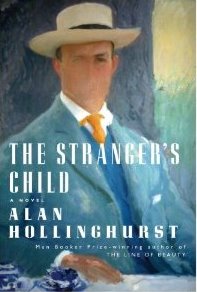
The Stranger's Child by Allan Hollinghurst

I admired The Line of Beauty more than I liked it; I could appreciate Hollinghurst's portrayal of 1980s England, but I couldn't get myself to care about it. This is my fault, not the works, but summoning my attention won't be a problem for The Stranger's Child, as World War I is a pet and professional interest. This promises a little more action and a little less decadence than The Line of Beauty, which is all to the good.


Nanjin Requiem by Ha Jin
In many ways, this is the book I've been wanting, and fearing, Ha Jin would write. Jin is a master of the finely observed domestic story, with a particular gift for silence, longing, and sadness. Here, the canvas is broadened considerably; the 1937 Japanese invasion of Nanking could not a be a more harrowing setting for Jin's narrative refinement. I am anxious to see how he manages.

Friday, September 3, 2010

Is This What Gender Bias in Reading Looks Like?

Our last post about the Weiner/Picoult/New York Times fracas got us thinking about our own reading choices, as we are the breed of primate to read the kinds of books reviewed in The New York Times. If it's possible that the Grey Lady expresses some selection bias in its reviews, might it be possible that your humble, opposable-thumb sporting Ape has some bias in his reading selections?

Unfortunately, the short answer seems to be yes.

After we finish reading Jonathan Franzen's Freedom sometime this weekend, The Ape will have read forty-five novels/short story collections this year, most of them new titles. Of these, only eight are by women. Even more startlingly, none of the women writers were of color.

We are not happy about this. It seems that if we reading according only to our taste, we overwhelming choose writers like us: white, male, and American (though we go out of our way to cover contemporary American writing, so that last one is not a surprise).

Some gravitation towards sameness is neither shocking nor undesirable, but the imbalance here is dismaying and is cause for some self-reflection. How did this happen and what is to be done about it?

Some of this is contingent: burning through all three of Stieg Larsson's books and and Philip Pullman's His Dark Materials Trilogy perhaps skewed the numbers. Still even last year, of the sixty-one novels/story collections we read, only fifteen were by women, somewhat better than this year, but still not a ratio we're comfortable with.

Perhaps as Picoult and Weiner charge, there is a bias in mainstream book-reviewing and that bias, paired with whatever our own biases are, materially affects the authors we read. Perhaps we've overlooked some serious, talented women for reasons that are not fully realized.

Perhaps the genre itself is skewed; perhaps it is dominated, for reasons either related or not to our own biases, by white men. Here are the female writers of American literary fiction with new books (either paperback or hardback) we've read this year: Julie Orringer, Lorrie Moore, Hilary Thayer Hamann, Amy Greene, Jennifer Egan, Aimee Bender, and Michelle Hoover. Who have we missed? Jane Smiley has a new book, but we've always been lukewarm on her. Is that the smoking gun, our relative lack of excitement for Jane Smiley?

For comparison's sake, here's a gender breakdown of The Millions' most anticipated books of 2010: forty-two total, eight by women--a ratio that seems oddly familiar. And yet not at all comforting.

We're going to thinking about this further, but are also interested to hear what others make of this. We're particularly interested in titles we might pick up to fill in whatever gaps we've missed from women writers over the past year.