Showing posts with label commentary. Show all posts

Thursday, August 4, 2011

Review: THE CURFEW by Jesse Ball

I’ve read some quite beautiful prose this year (Patchett and Obreht come to mind), but I’ve read only one truly great novel—and that is The Curfew by Jesse Ball.

One of the difficult things about writing a rave is that it sometimes devolves into writing a list of adjectives about certain elements of the novel; with a pan, it is easier to be both specific and entertaining. The passionate reviewer/recommender will, in their efforts to blow the trumpet as loudly as they can, sometimes focus on decibel and not on articulation. I think there is a good reason for this: in our age of ubiquitous recommendation,  volume is the only means of getting attention.And there is plenty of reason to wield hyperbole when writing about The Curfew.

My temptation is to stop at a pat, blurbable hybridization along the lines of “The Curfew is like a combination of Kafka and Calvino, drawing on the former’s dread but tempering it with the latter’s fancy.” And I believe that, to an extent, but it falls prey to over-praise trap. What have I really even just said about it? To say that it is a cross between Calvino and Kafka is really to say it is like neither, since it’s difficult to imagine Calvino writing the futility of The Trial or Kafka to let his imagination rip as Calvino does in Invisible Cities.

Wednesday, August 3, 2011

Why We Care About Literary Awards

Over at The Millions today, Mark O'Connell uses the occasion of the Booker long-list to ask a question that always seems to crop up around award time:
 ...why do we even care about this stuff? So Tom McCarthy — or whoever it was you might have wanted to win — didn’t get a prize. Does it really matter? By and large, awards like the Booker are intended to promote solid, well-written, more or less middlebrow fiction — the kind of books that broadsheet newspapers tend to give coverage to. And that’s surely a good thing for the publishing industry, for the literary editors of papers that still have books pages, for the small number of writers who get the nod, for booksellers and (I would guess) for the manufacturers of those stickers that get slapped with startling speed onto the dust jackets of shortlisted titles. But does it really matter at any other level — at the level, for instance, of literary culture as opposed to the publishing industry? I’m not convinced it does.
He then goes on to make a set of fairly common (and true) observations about literary prizes--that not everyone who deserves one gets one, that some of the past winners don't hold up well, that the prizes don't really reflect literary merit, and so forth. His argument, at its core, goes something like this: if a prize doesn't line-up with actual merit or import, then the prize really doesn't deserve the amount of attention it gets.

There are a couple of problems with this way of thinking. First is the old problem of "merit." It should be clear by now that there is no objective standard of literary merit by which we can measure the relative accuracy of given prize. The literary community might determine that certain works are more meritorious than others, and that, over time, should become part of the literary main. This doesn't mean that they are objectively better nor does it mean that their place at the head table is permanent. The canon, and I use that term loosely, is susceptible to change, and can do so dramatically (especially over relatively short periods of time).

The other reason we might care about literary prizes even if they do not accurately gauge achievement is, well, people care about literary prizes. Literary prizes are the last stage of the mainstream curation stage that starts with agents, then to publishers, then to reviewers, and then to awards panels. For many readers, a literary prize gives them the confidence to buy/borrow a novel/biography/history because they think that it is a fairly reliable indicator of quality.

So a pretty good reason to care about what book gets a particular award is that it channels a precious resource to that book--readerly attention. This, for those of us who care about literature, is both extremely interesting and hugely important. The books people read, get discussed, added to syllabi, and become part of our literary consciousness will inevitably shape that consciousness.

I'll end here with a reference to the next section after the quotation above:
I recently taught a night course focusing on novels which have won the Booker over the course of its short history. It was a hugely fun class to teach. The students were predominantly in their fifties, sixties, and seventies — retirees, middle-aged professionals and empty-nesters, mainly, who wanted to be better informed on contemporary fiction. 
The students in this class were using the Booker as a proxy for contemporary fiction. Whether or not we think that is reasonable position doesn't really matter; the position exists already. The answer to his question it turns out was sitting right in front of him: we should care about literary prizes because people care about literary prizes.


Wednesday, July 13, 2011

Well done, Mr. Potter: Uncollected Thoughts on The Boy Who Lived


Though the final book came out more than four years ago, the capstone (for now at least) on Harry Potter couldn't be placed until the final movie premiered. And here we are. Harry Potter is such a phenomenon that it's difficult to get any kind of perspective on it. From a publishing perspective, it was a once in a generation event, perhaps even a singular one. From a cultural standpoint, it cut across all traditional demographic lines. From a commercial angle, it is probably the most profitable artistic work in human history not named Star Wars. So to try to reduce The Boy Who Lived into a single essay or editorial seems foolhardy. Instead, here are some uncollected thoughts:

1. This will probably be the last book/series of books that are so conspicous out in public. Not only were the volumes themselves big and recognizable, but they were printed. Future mega-sellers will be consumed in large part on e-reading devices. I've often wondered if the public consumption of the Harry Potter books contributed their wild success, publicizing and legitmizing children's books for adult consumption. 

2. In many ways, Harry Potter represents the final integration of geek culture into mainstream culture, perhaps even becoming mainstream culture itself. Importantly, the first Harry Potter movie came out in 1999, 28 years after Star Wars premiered. I think the first generation of cultural geeks that Star Wars produced had a major influence on the fate of the Harry Potter franchise; not only were the children of Star Wars ready to consume fantasy themselves, but they could sanction their children to do the same. The generational pressure against genre that often exists was considerably lessened by the flowering of nerdom that had reached maturity by the late 90s. 

Wednesday, June 8, 2011

The Blind Assassin Close-Read, Volume II

I'm participating in The Atlantic's 1book140 read-a-long of Margaret Atwood's The Blind Assassin this month. The following is the second of a series of posts close-reading sections of the novel. If you somehow found your way here through 1book140, welcome. It's nice to have you
__________________________________

I so enjoyed writing about the first sentence of The Blind Assassin that I am going to take a shot at discussing another smallish piece of the novel, this time from Part III.

Let's set the stage: Iris is visiting her family's grave-site, some fifty years after her sister's death. She describes the monument:

The Chase family monument is hard to miss, it's taller than everything else. There are two angels, white marble, Victorian, sentimental but quite well done as these things go, on a large stone cube with scrolled corners. The first angel is standing, her head bowed to the side in an attitude of mourning, one hand placed tenderly on the shoulder of the second one. The second kneels, leaning against the other's thigh, gazing straight ahead, cradling a sheaf of lilies. Their bodies are decorous, the contours shrouded in the folds of softly draped, impenetrable material, but you can tell they're female. And rain is taking its toll of them: their once-keen eyes are blurred now, softened and porous, as if they have cataracts. But perhaps that's my own vision going.

Alright, there's more backstory about the monument in the next paragraph, but let's stop here for a moment. Last time, I wrote about why first sentences are a particularly good place to stop and smell the roses a little as you read. This passage is an example of another way-station, which is ekphrasis. Ekphrasis is the narrative description of a work of visual art. (The greatest example in Western literature is Homer's description of Achilles' Shield in Book XVII of The Iliad, the most well-known one is in Keats' "Ode on a Grecian Urn," where he describes, well, the urn.)

Why is looking at ekphrasis interesting? Couple of reasons. First, it is hyper-mimetic: not only does the writer have to describe the work of art, they also create the work of art. These are moments when a language artist is dipping into other art forms. Another reason is what ekphrasis does to the narrative time of the novel; it slows it down dramatically, even stops it. The closest cross-medium comparison is to a still-life, where precision, vision, and execution are at a premium. The writer is saying "hey, stop and pay attention to this, even though it has nothing to do with plot." For the close-reader, this is more inviting than cold pizza after a 2-for-1 night at the pub.

So, what's going on with this description of the Chase family monument?

1.  We have to remember that this is Iris narrating, not Atwood herself, so really this ekphrasis is Iris' vision, even as Atwood is staging it. Atwood is showing us what Iris is seeing, not what she would see herself or what we might notice ourselves. So, perhaps it's best to think of Atwood telling us something about how Iris sees as much as it is Iris telling us something directly.

2. Physical description tends to work structurally, so paying attention to how the description is built is important. Here we begin with the size ("taller than anything else") and then quality ("well done as these things go"). If the monument is a symbol of the Chase family, then the reading here is pretty simple: their family's story is bigger and more interesting than the average family's story. Or at least that's the way Iris sees it. One of these descriptions is empirical, "taller" is not up for debate. But the qualitative description certainly is. As cool as Iris' narration has been, here we get a small glimpse of how she understands her family history.

2. The most prominent feature is the pair of angels, and their parallel to Iris and Laura seems obvious. What is not obvious, however, is what exactly beyond two women the angels are saying about Iris and Laura. My sense is that the standing angel is Iris; it is in the "attitude of mourning" and standing, which suggests she is grieving. The phrase "attitude of mourning" is telling; is the angel mourning or just performing an attitude of mourning? At this point in the novel, Iris' attitude toward Laura and her death is still somewhat of a mystery. This angel is both turning away and touching the second angel, which suggest an ambivalence. Does she want to turn away but cannot fully? Or does she want to remain in contact but is forced to move away? At the very least, it is an enigmatic move and Iris is nothing if not a mystery here.

The second angel would then be Laura, the kneeling and sheaf of lilies (which often represent innocence) combined with the stare into the distance suggests youth and remove. She is the one being left kneeling, who is now looking away from the living.

3. The appearance of the angels is telling as well: "Their bodies are decorous, the contours shrouded in the folds of softly draped, impenetrable material, but you can tell they're female." There is an incongruity in describing "bodies" as "decorous," as "decorous" implies restraint and civility. How exactly can a body be "civil"? A similar incongruity occurs in the description of the clothing, which is both "softly draped" and "impenetrable" (Churchill's image of the "iron curtain" comes to mind.) The overall effect here combines frailty with strength, the physical with the emotional, and the overt with the mysterious.

4. The last sentence here about time and vision seems the most crucial. Of all the sculpted details that would be subject to corrosion, Iris (note the ocular reference inherent in her name) sees the blurred eyes and connects their aging with her own. I think a connection to memory is present, for what is memory but our seeing of the past? That time makes our memory "softer" and more "porous" means that our lived experience changes even after we have lived it, and our relationship to what has happened to us is in flux. And even the monuments, both sculptural and textual, we build in commemoration can never fully preserve the commemorated.
________________

There are other meanings to be gleaned from this passage, I am sure. And the next paragraph adds a layer of personal history to Iris' description that is worth incorporating into an analysis of this paragraph, but this is probably enough from me now.

What else do you see in this paragraph? What did I get wrong or miss?
_________________

Buy books mentioned in this post (or anything else, actually) using the below links, and The Reading Ape gets a small referral fee to defray our nominal operating costs.

Wednesday, June 1, 2011

The Close-Read: The First Sentence of The Blind Assassin


I'm participating in The Atlantic's 1book140 read-a-long of Margaret Atwood's The Blind Assassin this month. The following is the first of what I hope will be a series of posts close-reading sections of the novel. If you somehow found your way here through 1book140, welcome. It's nice to have you.
_______________________________________

A good first sentence can teach you how to read a novel. It can tell you what the novel cares about and what you should watch for. The best first sentences are gem-like: a product of compression and value.

The problem with this though is that first sentences are just that: first. You don't know anything about the novel yet and race through the first paragraphs and pages just to get your bearings, to figure out who is who and what exactly the hell is going on. So most readers read the first sentence purely pragmatically as a step toward getting comfortable with the work.

This isn't wrong of course and some first sentences don't warrant much attention. But many of them do and the rewards of looking at them closely can enrich the subsequent experience of the novel. (A professor of mine once said that when we started reading a novel, we should read the first sentence and then shut the book for awhile, letting that sentence percolate and prepare us to read the rest. I have found this wonderfully generative. So let it be clear that at this point I have read only the first sentence of The Blind Assassin).

Alright, so let's take a look at the first line of The Blind Assassin:

Ten days after the war ended, my sister drove a car off a bridge.

Some observations:

1. Without reading any farther, Atwood tells us a great deal about what we're in for. The subject of the sentence is "sister," so even if the predicate were not so juicy, this places the novel squarely in the domestic. The force of the main clause, though, might distract from the strangeness of the opening modifier. "Ten days" is an oddly specific amount of time after "the war ended." This specificity leads me to think that there is a connection between the war and its end and the sister's plunge, though no causal relation is indicated. Perhaps the disjunction between the scope of war and this intimate detail of family history creates the tension. The process of the novel will be to explain, and thus alleviate, that suspense.

2. And what war is this? Not too many clues here, though in late 20th Century English prose, you usually won't lose your money betting on World War II. Also, assuming for the moment that this took place in an industrialized country, it's been pretty hard to drive a car off a bridge for the last few decades, what with all the annoying safety regulations and all. So if that's a fair guess, then this happened in a time when cars were relatively accessible and before road safety became a concern. (That, or there was something wrong with the bridge.) Pretty thin evidence, to be sure, so we'll have to wait and see how this one pans out.

3. There's plenty to be said, though, about the sister. Well, not her exactly, but her car and the manner of demise. First, "drove" indicates an amount of agency that suggests this was not an accident. Had Atwood wanted to lead us toward foul-play or a mishap, I doubt she would have chosen "drove," and perhaps not even the active voice. The narrator's sister willingly went off a bridge. What we want to know now is why. More on this in a bit.

4. The other notable word choice here is the indefinite article "a": the sister drove "a" car off a bridge. We can guess that is was not her car; standard description would use the possessive to indicate ownership or affiliation. Whose car this is or how she came to be driving it is now also on the table.

5. As it turns out, the trajectory of the car with sister inside is not the most interesting thing about this sentence; this action is over at the moment of description. We want to know how this odd (not just the action itself, but the details as well) fate came to pass. This tells us something else about the novel; it is about the past. Not only is the sentence in the narrative past tense, but the narrator herself knows this history. So unless we flash forward to the present of the narrator's time, this is a novel about memory.

Here's what we have so far: war, memory, family, violence, and mystery. You could do worse to pull readers in.

6. This is extra-textual and so not strictly close-reading (forgive me Professor Atkins, wherever you are hounding earnest undergraduates), but this sentence reminds me of another first sentence: "When he was nearly thirteen, my brother Jem got his arm badly broken at the elbow."

Recognize it? Yup, To Kill a Mockingbird.

7. Not only is the structure parallel, a temporal marker followed by violent act with vague origin, but the thematic concerns also overlap (really all but war). Comparing To Kill a Mockingbird's first line to The Blind Assassin's also strengthens the case for seeing "my sister drove" as meaningful. Here, Jem's injury is clearly not of his own doing. And like in The Blind Assassin, the temporal marker is unusual--that Scout says "nearly thirteen" rather than "twelve" turns out to be meaningful, as To Kill a Mockingbird is very much a coming-of-age/disillusionment story.

8. First sentences and paragraphs are also especially important in first person narratives because they tell us something signficant about the narrator's relationship to the story they are telling. How invested are they in it?How much time has passed? Is this language that they might actually saying? Or is it the kind of first person narration with no imaginable actual speech act? The colloquial "got his arm broke" in To Kill a Mockingbird suggest that this is speech. In The Blind Assassin, the narrator's relationship to the action seems cold, or at least somewhat removed from the trauma described. The specificity and impersonality of the time (we might expect something about ages rather than this historical time) are more clinical than emotional. Maybe clinical is too strong, but the narrator does seem to be at some remove.

9. This last point isn't about The Blind Assassin directly. I got thinking about the evolution of first sentences in literature. This one feels modern, as much about intrigue as it is about art, without being experimental or otherwise jarring. It has a story-teller quality to it (if you were going to write a one-sentence story, this would be a good effort). In contrast, the novel's greatest century, the 18th, saw authors start broadly and drill down from there ("It is a truth universally acknowledged," "It was the best of times," "All happy families are alike," and so on). The standard opening now works the other way, using a detail as a wedge to introduce the story. Contemporary authors (massive generalization warning) seem to put a premium on keeping the reader off-balance at the start, rather than hold their hand. I suspect part of this is fashion, but another part might be the novelist's unwillingness to make the bold statement or sweeping proclamation. (Thanks a lot, culture wars).
________________________

Alright, I think that's all I have on this. On to the second sentence! Kidding, kidding. I'm sure I'll make it through the next paragraph at least...
________________________


Buy books mentioned in this post (or anything else, actually) using the below links, and The Reading Ape gets a small referral fee to defray our nominal operating costs.

Wednesday, May 25, 2011

Yawning at the Apocalypse: Thoughts from the BEA 2011 Showfloor

This time last year, I had been blogging for about six weeks before I went to BEA. The experience was eye-opening; I knew little about the world of publishing and publicity. It was exciting to get copies of books that I didn't yet know existed and wouldn't be available to the public for several months. There were also authors I admired signing around every corner.

A year later, I am more interested than excited. I pay much more attention to publishing news, so nothing at BEA was really a surprise. Also, my reading list is longer now that it has ever been, so there's quite a bit less room for serendipity or experimentation. So I turned up at BEA more for the spectacle than for the surprise.

Here's a few things I saw:

1. I think the rise of self-publishing reduced the number of oddball publishers and authors at BEA. For the entry fee, they can do quite a bit more online and ensorcel unsuspecting readers directly.

2. Imprints from the Middle East had some seriously huge and beautiful booths. Though, much like a mall in Dubai, they were huge, beautiful, and empty.

3. It's all well and good to know that China has some human rights issues, but it's another thing to flip through an English language Chinese magazine and see absolutely no critique or observation of anything wrong with any aspect of Chinese life.

4. There was one guy sitting the lounge outside the registration area with a weird hat advertising his book PROVING GOD. He sat there alone and made no move to pitch anyone his book or move about at all. I guess they don't make evangelicals like they used to.

5. It's one thing to know that romance moves the most units; it's another thing to see the Harlequin autograph lines. And it's another thing to try to cross those lines to saner ground.

6. Florence Henderson does not blink. Not in a metaphorical sticks-to-her-guns way, but in a Madame Tussaud's way.

7. The coolest thing I saw was Xerox's on-demand publishing set-up. This thing is basically the size of a washer and dryer and can spit out a pretty attractive paperback in a few minutes. I'm currently wondering if they will accept my left kidney as payment.

8.  In case there was an doubt, I am an elitist pig.

9. It's really too bad that the walk from Penn Station to the Javits Center is one of the 9 ugliest walks in Manhattan. The other eight are from behind dumpsters in the Lower East Side back to your apartment.

10. I thought e-galleys would be a big thing this year. I was wrong. You know what is a big thing? Publishers scared shitless of e-publishing.

11. Best way to spend your publicity dollars at BEA: complex carbohydrates. Cookies, whoopie pies, pastries, bagels, whatever. For 100 bucks worth of Oreos, you can have every librarian in New England visit your booth. Of course, then you have every librarian in New England at your booth. Kidding, librarians, kidding. We all love you. Now. Back in grade school you creeped us out.

12. The L. Ron Hubbard landing craft was a bit smaller this year, though it was more informative. Did you know you can get Dianetics in over 37 Earth languages?

13. I really want to care about self-published novels. I saw nothing that moved the needle for me though. (Keep it clean, Ape. Keep it clean).

14. Blogging about literature is exponentially more interesting that the publishing business. And more relevant too.

15. YA literature.....the enthusiasm for the genre blows me away. I wish literary fiction had as much juice going for it. Lines of people 100 deep waiting for autographs from people I had never heard of. Considerably shorter lines for Karl Marlantes autographs. Sigh.

16. Tote bag hoarding was in full effect. Saw one surly homonculus with about 12 bags completely empty freebies on his shoulder. Disconcerting.

17. A truckload of digital publishing businesses who all provide weirdly vague services. Can't help but think this is a kind of carpetbagging before the war is over.

18. Couldn't swing a dead cat without seeing something using an Ipad. I mean, my dead cat kept hitting those bastards.

19. Didn't realize it until I was out on the showfloor, but I am about ten times as interested in the Book Blogger Convention than anything the publishing business is hawking. Not a great sign for them.
___________________________

Buy books mentioned in this post (or anything else, actually) using the below links, and The Reading Ape gets a small referral fee to defray our nominal operating costs.

Sunday, May 22, 2011

Philip Roth and The Man Booker Judging

As has been widely discussed, last week Philip Roth won the Man Booker International Prize (which might as well be called, "For Those Who Haven't Won Nobels." This choice would have been widely accepted, even perhaps expected, if one of the judges had not resigned her position over the selection.


Carmen Callil decided to air her grievances publicly and spectacularly, with initial disparagement and now more considered remarks.


This is the stuff of good literary water-coolering ("It feels as if he is sitting on your face") and a fair glimpse of the politicking and subjectivity of such awards. To be honest, I tend not to find the back-room dealing of the judges interesting, though I do care about who wins these awards since they tend to provide the most publicity literature receives over the course of the year.


What strikes me know, though, is how little Callil's objection to Roth is about Roth himself: of her 828 words, less than a hundred of them are about Roth specifically. The rest are about the scope of the award and her displeasure about the process. I was anxious to see why Callil objected to Roth strongly, but instead all she said was this:

There are great moments in Roth's work. He is clever, harsh, comic, but his reach is narrow. Not in the Austen, Bellow or Updike sense, because they use a narrow canvas to convey the widest concepts and ideas. Roth digs brilliantly into himself, but little else is there. His self-involvement and self-regard restrict him as a novelist. And so he uses a big canvas to do small things, and yet his small things take up oceanic room. The more I read, the more tedious I found his work, the more I heard the swish of emperor's clothes. 
Hard to admire him, hard to see him on the long list, hard to award him this international prize.
If I understand this correctly, Callil's concern is the narrowness of Roth's writerly interest, mainly that that interest is principally "himself" and that self holds little interest to Callil. 

Analyzing Callil's argument is difficult here because she states a preference and doesn't use much in the way of evidence. Still, there are a couple of interesting points here. 

First, the number of metaphors she uses to describe her dissatisfaction is fascinating: "reach," "narrow," "canvas," "digs," "oceanic," and "swish of emperor's clothes." There is a certain cognitive dissonance here (how does one dig into an ocean), but at its core, Callil's complaint is about scope. In her estimation, Roth's artistic vision is limited and that to which it is limited is of little interest to her. 

That Callil finds the fact that Roth's greatest subject is Roth tiresome is of course her prerogative, but I wonder if she isn't missing the point of Roth's self-examination, and in doing so misses reason he is the most decorated and widely read living writer of American literary fiction. Roth's signature achievement is not spectacular understanding, but a consistent, experimental, literary investigation of the 20th century's central artistic theme: the problem of the self. 


Roth's consternation over the self leads him to a staggering display of artistic virtuosity, encompassing nearly the whole array of mid-to-late 20th Century generic forms. Incendiary debut? Goodbye, Columbus. Shocking coming-of-age novel? Portnoy's Complaint. Confessional literature? The Zuckerman Trilogy. Speculative fiction? The Plot Against America. Magical Realism? The Ghost Writer. Postmodernism? Operation Shylock. Satire? The Great American Novel. Domestic drama? American Pastoral. Carnivalesque? Sabbath's Theater. And the list could go on. 


Roth's "limited" vision is the vision of kaleidoscope--fragmented, combinatorial, various, and beautiful. Callil's privileging of subject ignores the bounty of Roth's formal mastery. To dismiss him for only writing about himself would be like dismissing Monet for only painting plants. 
___________________________________________________

Buy books mentioned in this post (or anything else, actually) using the below links, and The Reading Ape gets a small referral fee to defray our nominal operating costs.

Monday, May 2, 2011

2011 Tournament of Books: Handing Out Awards to the Judges

So the The 2011 Tournament of Books ended almost a month ago, crowning Jennifer Egan's A Visit from the Goon Squad winner in a 9-8 decision over Jonathan Franzen's Freedom. Since then, Goon Squad has gone on to win The Pulitzer Prize and the Los Angeles Times Book Prize to go along with its National Book Critics Circle Award. Clearly, Egan's book is the must-read novel of 2010 and deservedly so.


But we're not here to judge the books; we're here to judge the judges. Here are some hits and misses from the omnibus decision:


Bravos

1. The Best Analytical Point Award goes to Anthony Doerr
From a certain angle these books feel the same: well-made realistic fiction zeroing in on American bourgeoisie. Sharp detailing. A smattering of jokes. Searing observations about suburbia.
Many of the judges commented on Goon Squad and Freedom having a certain shared ethos, and Doerr nails it here. This observation is not only true of the final pairing, but of the wider tournament field itself. This was a tournament largely about middle and upper middle class white people in contemporary America. The stylistic differences between Franzen and Egan mask a deeper sympathy and might be making difference out of sameness.

2. The Best Metaphor Award goes to Andrew Womack:
For me, this decision comes down to pacing, and Franzen is the Pink Floyd to Egan’s Sex Pistols; by the end of Freedom I couldn’t take another meandering guitar solo, while I was dazzled by how much Goon Squad packed into such a compact space.
While I think Womack is misusing "pacing," which is about cadence and tempo and not length, he's right to mention the reading experience of each work. We're living in a Goon Squad world where shorter, percussive cultural objects about experimentation and recombination seem to be winning the day. Freedom has more in common structurally with Henry James than with anything that exists in our digital age.

3. The Best Perspective Award goes to John Williams:
Egan’s refracted structure seems only half-necessary, and I’m not sure that in 2011 it’s as innovative as it’s gotten credit for.
Williams is bang-on here: the "innovative" appellation is overblown. Goon Squad isn't even the most technically experimental work in the field (Nox and Super Sad True Love Story would rank above it). And though most reviewers, myself included, haven't paid enough attention to the why of Egan's structure, I do think there is a relationship between the structure and her central concerns that is stronger than "half-necessary."  

4. The Seeing the Forest for the Trees Award goes to C. Max McGee:
Where Freedom is a novel of oversharing, telling many episodes from several angles, Goon Squad, often to its benefit, floats us among characters and across decades.
McGee does us the service of noting the difference between scope and length. For all its heft, Freedom is a more focused, exploratory work, concerned with detail, ambiguity, disagreement and indecision. This kind of narrative noodling takes a great deal of time. Goon Squad is like Rufus from Bill and Ted's Excellent Adventure, dropping in and out of history for the most interesting bits. If we prefer Goon Squad to Freedom these days, it might well be that we prefer sampling and observation to sustained investigation.

5.  The Best Invocation of Subjectivity Award goes to Elif Batuman:
Freedom, however, sucked me in from page one. Its central issues—the good versus the cool; how to reconcile sex with normal life; how to live—are particularly close to my heart these days.
 Batumann manages to speak from her own taste in a way that tells us something about the texts at hand without resorting to judgment. I think she identifies the source of the messiness that Freedom is sometimes charged with: how do you write a book about these knotty issues in a way that doesn't end up confused and compromised? Any such effort would likely be dismissed as unrealistic and naive (e.g., the ending of Lionel Shriver's So Much for That). Goon Squad's central themes (time, detachment, and distance) lend themselves more readily to cleaner, more burnished stories. I do wonder if there are two types of reading personalities: one group prefers literature that makes order out of chaos and the other group wants literature to revel in the messiness.

Boooooooooooooos

1. The Beating a Dead Horse Award goes to Jennifer Weiner
 It’s like Sophie’s Choice, if Sophie hated both her kids.Worse, neither book was any fun. Freedom’s characters range from loathsome to despicable, with the author’s contempt dripping from every sentence. Egan’s book seemed more like an exercise in Let Me Show You How Clever I Am than anything as lowbrow as entertainment. But Egan gets my vote, because if Franzen takes the prize, then the terrorists win.
Weiner had a chance to add substance to her on-going displeasure about the separation of "serious literature" from "chick lit." Instead, she chose unfunny sarcasm, a reference to the holocaust, and the always creative Let Me Capitalize Things To Show Ironic Distance From a Category strategy of satire. (Also, how is not being any fun "worse" than having to choose which of your children to kill?). If Weiner ever again wonders why people might not take her seriously as she might like, she'll have the comfort of returning to this brief paragraph to assuage her anxiety.

2. The Everyone Who Plays Gets A Ribbon Award goes to Matthew Baldwin
In the first round I decided against Super Sad True Love Story in its second paragraph, so you’ll be pleased to hear that I made it all the way to page 11 of Freedom—in which Jonathan Franzen describes a child as “like an imaginary friend who happened to be visible”—before declaring it the winner. I think I’ve really grown as a critic.
I guess if you are aware of and self-satisfied about your lame effort, then it's all OK.

3. The "Mixed" Metaphor Award goes to Matt Dellinger
These books were like cocktail cousins made with the same liquor: a Manhattan and an Old Fashioned. A Visit from the Goon Squad is the more concocted, more garnished drink (e.g., the PowerPoint chapter). It’s wonderfully balanced and beautifully made. Freedom is the high-octane classic, not as easy to drink (e.g., 562 pages), but its seriousness delivers more wallop in the end. Goon Squad delighted me; Freedom clobbered me. The martini beats the Tom Collins. 
 Maybe I need to be Don Draper to understand the alcohol metaphor here, but by this logic would straight grain alcohol be the best possible drink? And isn't a good martini harder to make than a good Tom Collins? And a Manhattan and Martini are not the same, right? To crib from this boozy allegory: the first step is admitting you have a problem.

__________________________
That about does it for the coverage of the 2011 Tournament of Books. Thanks for reading, and we'll be back next year. The Ape's the early prediction for the 2012 final pair is *DRUMROLLLLLLLLL* Tea Obreht's THE TIGER'S WIFE against Colson Whitehead's ZONE ONE. You heard it here first. Unless I'm way off, in which case you heard it from a guy at the laundromat.

Monday, March 28, 2011

2011 Tournament of Books: Breaking Down the Quarterfinals

We're now down to four left in the 2011 Tournament of Books. Let's see how we got down from eight...
____________________________________________


Quarterfinal 1 Winner
Quarterfinal 1: Freedom by Jonathan Franzen versus Room by Emma Donogue, judged by Matt Dellinger


Dellinger on Freedom
But on the whole, [Freedom's] writing is deep and rich and steady. The themes are familiar yet surprisingly well-woven. The characters and their interactions are finely observed, high-resolution, and intricately textured. By the time I was two-thirds of the way through, references to moments and people from earlier in the book brought back what felt like actual memories. Freedom is a very, very long page-turner, written by a grownup.


While I agree with Dellinger's end assessment, "written by a grownup" is a devastating indictment of Room. The charitable reading of this is that Dellinger is referring to the voice of the narrator of Room and not to the writer herself, but that's not what the sentence suggests. The question it raises, though, is an interesting one: is a first-person book about a five-year old written, in essence, by that five-year old? What depth and complexity can an author layer on top of such a limitation? I do think that Donogue's choice of perspective absolves her of the responsibility to add complexity, but is that to the good of the work? Some might argue that writing a compelling narrative through the eyes of a five-year old adds difficulty, but it seems to me that it actually lowers the overall degree of difficulty, since nettlesome, adult concerns and ideas are foreclosed. Hence, Room is a tighter narrative, but it's just so infuriatingly narrow. Donogue doesn't give us the most interesting part of the story---the interior world of a woman who has been raped every day for years and raised a son in a ten-by-ten shed. I think this point goes for almost all stories written from a child's point-of-view; they must be penalized in the final judgment for not dealing with the full force of adult consciousness


Quarterfinal 2 Winner
Quarterfinal 2: The Finkler Question by Howard Jacobsen versus A Visit From the Goon Squad by Jennifer Egan, judged by Elif Batuman


Batumann on A Visit from the Goon Squad:
"...as for A Visit From the Goon Squad—interconnected, chronologically-scrambled short stories with recurring characters—I’d heard it described as “a display of Ms. Egan’s extreme virtuosity.” The word “virtuosity,” in book reviews, is a real red flag for me. Perhaps relatedly, I’m suspicious of interconnected stories, which often remind me of the arbitrary, contrived tendency of literature, the tendency that poses a particular threat to the short story, a form where characters all too easily become interchangeable, and each plot seems like it might as well be a sequel or prequel to the one before.


I wish Batumann would have explained "the word 'virtuosity,' in book reviews, is a real red flag for me." My guess is that she sees 'virtuosity' as a privileging of form over content. I find myself increasingly sympathetic to this reading. Goon Squad is remarkably well-executed, with formal dexterity that serves the work's rich intellectual and emotional concerns. I've noticed a rise of late of what I've begun to think of as "balloon-animal fiction"--fiction that pairs undeniable writerly gifts with otherwise unremarkable substance. 
It is a neat trick to make a balloon that looks like a dog--but the likeness of the dog is still fairly crude. If the goal is to make a likeness of a dog, then even the most adroit balloon-savant will lose to the average practitioner of most standard media. In art, sometimes we over-value balloon-twisting ability, to the detriment of our understanding of dogs.


 (I am thinking here of Swamplandia!, The Education of Bruno Littlemore, The Particular Sadness of Lemon Cake, Room, and to a lesser extent The Fates Will Find Their Way).  I think there's more to be said about this, but that's as far as I've wandered to this point. 


Quarterfinal 3 Winner

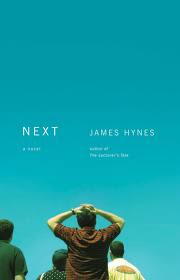
Quarterfinal 3: Nox by Anne Carson versus Next by James Hynes, judged by John Williams


Williams on Nox:
O’Rourke [reviewer for The New York Times -RA] strains to give voice where [Nox] is silent, an effort I found almost impossible to mount myself. Carson’s loss must have been profound, and Nox’s profundity is meant to arise from the gap between her almost illusory relationship with her brother and her real suffering. The fact that she has a far more intimate knowledge of Herodotus and Catullus than she does of her brother might strike some as interesting, even moving. I just found it distant and cold.


I think Williams is right on here, though I would have come to a different judgment, as I am one of those who, as Williams posits, found Carson's "far more intimate knowledge of Herodotus and Catullus" than her knowledge of her brother "moving." I see Carson' grief as a scholar or writer's lament--her immersion into a literary/artistic/historical worlds supersedes her participation in the imminent world. This is compounded by the fact that her only recourse for this division is more literature, more history, more art. Nox is a bandage on an open-wound. Hynes must deploy considerable artifice, as Williams notes, to generate what pathos there is to be found in Next; I'll take inscrutability and distance over construction and spectacle. 


Quarterfinal 4 Winner
Quarterfinal 4: Model Home by Eric Puchner versus The Particular Sadness of Lemon Cake by Aimee Bender, judged by Kate Ortega


Ortega on The Particular Sadness of Lemon Cake:
The book carried me back to my embarrassing teenage days, while also raising the stakes. Rose knows she is different and yearns to fit in, just like I did and just like all teenagers do. But she is different for reasons that put to shame the normal teenage feelings of being an outsider. She would have rejoiced if her only “difference” had been a naggy brother. In the end, her story brings with it a reminder that the individual things that make every family special go far beyond bed sheets.


Bender's book does indeed replicate and intensify the central solipsism of teenager-hood: "Rose knows she is different and yearns to fit in, just like I did and just like all teenagers do." But replication and intensification are not of and in themselves avenues toward understanding. Ortega's favorable judgment of The Particular Sadness of Lemon Cake seems to hinge on the novel's ability to "carry [her] back to [her] embarrassing teenage days," but she does not explain why such a transportation is valuable and/or entertaining. Instead, she says that the "story brings with it a reminder that the individual things that make every family special go far beyond the bed sheets." I don't know what this means. Does she think that recognizing familial individuation might make us think of our own families differently? Or that the deep structure of family systems varies somehow and we should acknowledge that? That is it is a "reminder" suggests that we have forgotten something, though I have a hard time imagining a reasonable person believing all families are pretty much the same (though this even this logic is contradicted by the statement that all teenagers are the same.) 
_______________
On that cranky note, we sail into the semi-finals. Now is time for the favorites to collide and for zombies to rise. The two favorites have steam-rolled into an epic showdown, and while Skippy might be dead, my guess is that Murray's book is laying in the tall grass. 
_______________

Until April 15th, all referral fees generated by The Reading Ape will go to support Rock City Books & Coffee. Read more about the effort here. Just click through any of the below to do your shopping, and you'll be helping. Many thanks.
  Shop Indie Bookstores    Visit Powells.com 


Monday, March 21, 2011

2011 Tournament of Books: Breaking Down Week Two

After my stellar week one performance, my match predictions for week two went directly into the proverbial tank. That's bad for my bracket, but great for the post-match commentary....commentary. Here's what stuck out to me from Matches 5-8.... (and here's last week's round-up for Matches 1-4)


Match 5 Winner: Nox
Match 5: Nox by Anne Carson versus Lord of Misrule by Jaimy Gordon, judged by Andrew Womack.


Womack on Nox:


"Still, I was wondering, does it qualify as a contender here? I’m still not completely sure. If there were a nonfiction version of the Tournament of Books, I decided, this work wouldn’t fit so neatly in there, either. It’s part-this and part-that, and no one except the author, and probably not even her, can know which are which."


The tacit understanding behind the Tournament of Books is that it really is a Tournament of Novels (almost exclusively in English). Could the net be cast wider? Probably, but the judging would have more of these types of reactions. Judging (and reading judging) is really only satisfying if the contestants exist on the same plane because what we like about judging is the close assessment of the virtues of objects within a category, not the virtues of the category itself. If I ask "what do you like better: a banana or The Godfather Part II," chances are you won't be comparing De Niro's acting to potassium levels; you'll be debating the qualities of food versus the quality of film. 


Match 6 Winner: Next
Match 6: Next by James Hynes versus So Much for That by Lionel Shriver, judged by Jessica Francis Kane

Kane on So Much for That:

"Every character can and does at some point deliver a diatribe on one issue or another with fluid sentences and the right vocabulary, making them really qualified to testify before Congress, but a little less compelling as fictional creations."


Social issue novels, like comedic novels, don't age particularly well; so much of what they do depends on the concerns of the day that once the calendar flips, the impact of the novel fades. The few that do manage to last tend to have characters that transcend their particular "issue." As Kane notes, the characters in So Much for That are so aware that they are living lives embroiled in "social issues" that it prevents them from having much independent identity. Now, I think So Much for That could have made the characters' awareness of social issues itself a "social issue': it seems interesting that we do have a surplus of canned cultural criticism at the ready. In So Much for That, this is not at all helpful in solving real problems; the only thing that solves problems is decisive action (let's ignore for a minute that this decision action requires nearly a million dollars in cash and a new life in a third world country where the money will last a lifetime to work)


Match 7 Winner: Model Home
Match 7: Super Sad True Love Story by Gary Shteyngart versus Model Home by Eric Puchner, judged by Matthew Baldwin

Baldwin on Super Sad True Love Story:

I got exactly as far as “UnitedContinentalDelamerican” before giving up on Gary Shteyngart’s Super Sad True Love Story, which is to say about halfway through page one. If my 40 years on this big blue marble have taught me one thing, it’s that hyperbolic corporate portmanteaus are the hallmark of wacky five-minutes-in-the-future dystopias. And that, unfortunately, is a class of literature of which I have had my fill.

Baldwin on Model Home:

Set in 1985, Eric Puchner’s debut novel documents a nuclear family on the cusp of detonation.


Somehow in Baldwin's reading experience, novels about the problems of the nuclear family rarer than comic dystopian novels. (I would imagine that anyone who reads literary fiction with some consistency would find this...striking). This is a secondary problem of judging categories rather than subjects--biases for or against a class become the vectors of analysis, rather than the particular qualities of each. To continue the above example of categorical judging: That Baldwin eats a lot of bananas biases him against finding a particular banana desirable, and that he hasn't seen many mafia movies predisposes him to be delighted by The Godfather II


Match 8 Winner
Match 8: The Particular Sadness of Lemon Cake by Aimee Bender versus Bloodroot by Amy Greene, judged by Catherine George

George's verdict:

So. Bloodroot, a story that might’ve caught me if it hadn’t been so obscured by its own words, versus Particular Sadness, a fine example of craft that just didn’t move me. Who wins? In the end, Particular Sadness chalked up a bunch of extra points for technical merit, and today, that’s all it needed to move forward.


This was perhaps my favorite moment from the first round judging. Why? Well, George's description of the strengths and weaknesses of the novels lines up with my own, yet she comes to a different verdict. Her preference for craft leads her to prefer (slightly) The Particular Sadness of Lemon Cake. My preference for interesting messes over bloodless craft leads me to prefer (slightly) Bloodroot. This then is not a disagreement, but an exposure of different value systems. This moment reminds me of the subjectivity of my own taste and gives me access to someone else's subjectivity---to my mind this can only enrich the reading experience. 
__________________________


I'll be doing a similar work-up after this week's round two judging, already underway, when it's wrapped up.
__________________________


Buy books mentioned in this post (or anything else, actually) using the below links, and The Reading Ape gets a small referral fee to defray our nominal operating costs.

Shop Indie BookstoresVisit Powells.com