Saturday, July 16, 2011

Critical Linking: Harry Potter Edition

The Ape's weekly link-fest finally returns, this time with a special all-Harry edition.

______________________


From one of the first news stories about Rowling, published just a few weeks before the first book appeared:
The eponymous hero of Harry Potter And The Philosopher's Stone is an orphan who is brought up by a cruel aunt and uncle. He discovers he is a wizard and passes through a time warp into a world of make-believe.
This description seems like a time-warp into a world of make-believe.

Thursday, July 14, 2011

Friday Forum: Stories Best Untold?

As Dance with Dragons burns up the fiction bestseller list, a considerably more sobering title has been the talk of the non-fiction world this week: Jayce Duggard's A Stolen Life. From the little I know of her story, it is an unconscionable tale that strains the limits of what we understand as survivable. The early reviews of the book have been somber, almost reverent, and have remarked on Duggard's calm and restraint.

But I will never read this book. Not only am I quite squeamish by nature, but I am not sure that hearing this story is really, well, good for me. I'm not saying the truth shouldn't be told if we find it discomforting, only that the general outline is enough for me. People are fascinated by her story, and I can understand why. But it does lead me to wonder: at what point does a story become harmful? Should some stories not be told?

In the final chapter of Beloved, Toni Morrison includes the line "This is not a story to pass on," suggesting, quite paradoxically, that the harrowing story we have just read is not one we should have heard.

In Elisabeth Costello, J.M. Coetzee's titular character wonders about the limits of story-telling when she reads the memoir of particular villainous Nazi commandant. She is afraid that the evil of his being, revealed intimately in prose, can infect or damage her own humanity.

At what point does a story become dangerous? Would you listen to any story? Does it matter if it is factual? If we believe that stories can be good for us, doesn't it necessarily follow that some of them might well be bad for us?


Wednesday, July 13, 2011

Well done, Mr. Potter: Uncollected Thoughts on The Boy Who Lived


Though the final book came out more than four years ago, the capstone (for now at least) on Harry Potter couldn't be placed until the final movie premiered. And here we are. Harry Potter is such a phenomenon that it's difficult to get any kind of perspective on it. From a publishing perspective, it was a once in a generation event, perhaps even a singular one. From a cultural standpoint, it cut across all traditional demographic lines. From a commercial angle, it is probably the most profitable artistic work in human history not named Star Wars. So to try to reduce The Boy Who Lived into a single essay or editorial seems foolhardy. Instead, here are some uncollected thoughts:

1. This will probably be the last book/series of books that are so conspicous out in public. Not only were the volumes themselves big and recognizable, but they were printed. Future mega-sellers will be consumed in large part on e-reading devices. I've often wondered if the public consumption of the Harry Potter books contributed their wild success, publicizing and legitmizing children's books for adult consumption. 

2. In many ways, Harry Potter represents the final integration of geek culture into mainstream culture, perhaps even becoming mainstream culture itself. Importantly, the first Harry Potter movie came out in 1999, 28 years after Star Wars premiered. I think the first generation of cultural geeks that Star Wars produced had a major influence on the fate of the Harry Potter franchise; not only were the children of Star Wars ready to consume fantasy themselves, but they could sanction their children to do the same. The generational pressure against genre that often exists was considerably lessened by the flowering of nerdom that had reached maturity by the late 90s. 

Tuesday, July 12, 2011

The Deaths of Minor American Poets: The Answers

Thanks to those of you who participated in the Deaths of Minor American Poets Quiz in celebration of one year of Literary Facts of the Day on Twitter. Here are the answers:

Theodore Roethke suffered a heart attack in friend's swimming pool

 Robert Johnson drank whiskey poisoned by bartender (allegedly over a woman)

Philip Freneau died in a snowstorm while walking home from a tavern

Weldon Kees just up and disappeared.

Randall Jarrell was hiit by car while walking to hospital to receive treatment for injuries suffered during a suicide attempt.

Adelaide Crapsey died from tuberculosis of the brain lining.

Lew Welch left an ominous note, walked into the woods with a rifle, and was never seen again. 

Frank O'Hara was hit by a dune buggy.

Jack Spicer succumbed to psoriosis, and his last words were "My vocabulary did this to me."
________________


Congratulations to Robert, who got them all correct. Jesse Ball's The Curfew is winging its way to you as we speak. 

2012 Tournament of Books: Judges Wishlist


Well, I thought yesterday’s 2012 Tournament of Books forecast would quench my thirst for Rooster talk, but it turns out it only made it worse.

So, today we’re back with more; this time looking at the judges. Had a good crop of judges last year, but a dragoon of new judges is surely in the offing. Here’s who I’d like to see, using last year's mix as a guide.

Group A: The Morning News Staff

This Year: 
Rosencrans Baldwin, Matthew Baldwin, Andrew Womack

Wishlist for Next Year: 
They get to pick their team here, but I’d like to see them go from 3 slots to 2. Let’s slot the Baldwin brothers in here, if for no other reason than the mental image of Stephen and William Baldwin trying to judge a literary prize.

Monday, July 11, 2011

Forecasting the 2012 Tournament of Books

We've reached the half-way mark of 2012 and many around the literary web are listing their favorite books of the year so far. This seems like as good as excuse as any to scratch my Tournament of Books itch. If literary 2011 ended right this very minute, what would the 2012 Tournament of Books look like? Commence totally unsupportable speculation. Let's take a look at this year's books that have the best chance of making the field of sixteen.

First, here were last year's contenders:

The Particular Sadness of Lemon Cake, by Aimee Bender
Nox, by Anne Carson
Bad Marie, by Marcy Dermansky
Room, by Emma Donoghue
A Visit From the Goon Squad, by Jennifer Egan
Freedom, by Jonathan Franzen
Lord of Misrule, by Jaimy Gordon
Bloodroot, by Amy Greene
Next, by James Hynes
The Finkler Question, by Howard Jacobson
Skippy Dies, by Paul Murray
Model Home, by Eric Puchner
So Much for That, by Lionel Shriver
Super Sad True Love Story, by Gary Shteyngart
Kapitoil, by Teddy Wayne
Savages, by Don Winslow

One thing The Morning News does well is give us a nice mix: satire, short stories, poetry, coming-of-age, page-turners, comedies, etc. So the prime directive here is not necessarily to list the year's sixteen "best" books, whatever that means exactly, but to replicate the heterogeneity of previous tournaments. Here's my effort, with a brief explanation for each contestant.

In no particular order:

State of Wonder by Ann Patchett
State of Wonder seems to be the literary novel of the moment. Like So Much For That from last year, it takes on the health care industry, though with considerably more adventure, style, and daddy issues than Shriver's novel. Should State of Wonder make the field, it has to, at this point, be considered a favorite.


Friday, July 8, 2011

Friday Forum: Is there an ethics of reading?

The idea of the Friday Forum is to take some idea, issue, or story from the week, think about it a little, and then open it up for discussion. Last week's discussion of why we care about authors was fantastic, but it's a new week, so time for a new topic.
_______________

I saw a couple of posts this week that, while not on the same topic directly, both spoke to a larger issue.

First, from Rachel's post on reading guilt:
I read a lot. I read a lot of books that I’m pretty sure I’m going to like. When my constant refrain is “so many books, so little time,” doesn’t it make sense to choose books I’m pretty sure I will enjoy? How much obligation do I have – as a reader, as a book blogger, as a consumer – to discover and promote books that may not get as big of a voice as others because they come from small publishing houses or because they do not get as large a cut of the promotional pie in their big houses? And is the obligation to my readers, to authors who need the voice, or to myself ? Am I too comfortable in my reading choices? And is that okay?

Next, from Amy's thoughts on reading and diversity:
If your passion are the new big books I’m not saying you should abandon them, and I have nothing against people who read only review copies or only new books. But I do think, as Teresa said, that we all have to think about what our passions truly are and what we find important. We have to realize that these books are often white, heterosexual, cisgender, and North American or European. If you only request those books, what message is that sending to the publishers about what sells? Diverse books are being published (though not enough), so if new books are your passion there are still options to diversify if you are willing to try!

Both posts imply, quite correctly I think, that our reading time and attention as both social and economic value. Not only does what we read influence what gets published, but also what kinds of authors and ideas we let into our consciousness.

Thursday, July 7, 2011

Dictionary of Literary Techniques: The Dostoevsky Dash

I'm using The Blue Bookcase's weekly question as an excuse to start writing new entries in my ongoing Dictionary of Fictional Techniques. Head over there to see what other literary devices people find interesting
_________________________________________


The Dostoevsky Dash:
The elision of a proper name or place with a series of dashes. 

Example:
"At the beginning of July, during an extremely hot spell, towards evening, a young man left the closet he rented from tenants in S------y Lane, walked out into the street, and slowly, as if indecisively, headed for the K-----n Bridge."
                 --The first sentence of Crime and Punishment by Fyodor Dostoevsky 


Discussion:
This one has always puzzled me. If a real place, why not name it? If a fictional one, why not give it a fake name? The best answer I have for this little convention is that it signals the line between fact and fiction. To give the name of a real place pulls the narrative toward fact, imposing restraints that the author might not want (for example, does Dostoevsky want us to be thinking of real St. Petersburg locations with such specificity? How does that change our experience of the story).

Wednesday, July 6, 2011

The Close-Read: The First 48 Words of Kafka on the Shore by Haruki Murakami

I so enjoyed participating in last month’s 1book140 read-a-long of The Blind Assassin that  I am coming back for July’s pick, Kafka on the Shore. Last time, I wrote about just the first sentence of The Blind Assassin. This time, I managed to make it through the first 48 words. Disclosure: I have read The Wind-Up Bird Chronicle but no other Murakami. Also, I have only read the first 48 words, so any correct guesses or horrible misses here should be judged accordingly.

Here’s what I saw.

1.  The preface’s title, “The Boy Named Crow,” is deceptively simple. On its surface, this is a basic bit of information: this section is about a boy whose name is Crow. If our eye catches anything, it’s the unusual name “Crow,” but I think the telling part is the more subtle, “named.” We might think that Crow is some kind of nickname, but the “named” indicates that it is quite intentional—this is not an acquired name, it is an original. Now who did the naming is less clear; conventional reading would suggest that this was his given name, but there is also the possibility that Crow gave himself this name. (I think the rest of the first paragraph supports this theory, but more on that in a moment.)

Anyway, the point here is that someone wanted this kid to have a weird name. If it was his parents, then he is that kid with parents who wanted him to have a weird name. If he named himself Crow, then he is the kid that gave himself a weird name. Either of these kids is to be monitored closely.

Tuesday, July 5, 2011

Best Books of 2011...Looking forward to the Second Half

The Millions is back with its preview of forthcoming books, this time looking at the best books of the second half of 2011.

Looks like a terrific six months of reading (with October being a particular gutbuster).

Setting aside the absolute must reads for a lit fic nut (Eugenides, Whitehead, DeLillo, Didion, Ondaatje, Murakami), here's what I am most looking forward to getting my opposable thumbs on:


We Others: New and Selected Stories by Stephen Millhauser

By my scorecard, Millhauser is 2 for his last 2 with Dangerous Laughter and Martin Dressler, We and Others is a pretty good bet. Millhauser assembles eclectic, compelling stories and characters just about as well as anyone, so this new collections promises to be a smorgasbord of setting and stories.


The Art of Fielding by Chad Harback

This is a debut novel about baseball and college with magnificent blurbs by Ape favs Franzen and Evison. Harback is also the found of n+1, so the literary nerd factor here is set to 11.


I Married You for Happiness by Lily Tuck

Tuck won the 1983 National Book Award for the great The News from Paraguay and then....didn't write a new book. Until now. That alone gets my fingers ready for page-turning, but it also stalks one of the hardest fictional game: portraying the relationship that develops between two people after a lifetime lived together. This, combined with the title, has my tear ducts building up inventory right now.


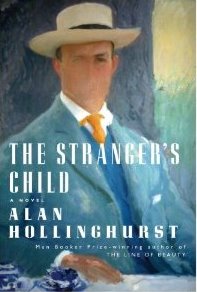
The Stranger's Child by Allan Hollinghurst

I admired The Line of Beauty more than I liked it; I could appreciate Hollinghurst's portrayal of 1980s England, but I couldn't get myself to care about it. This is my fault, not the works, but summoning my attention won't be a problem for The Stranger's Child, as World War I is a pet and professional interest. This promises a little more action and a little less decadence than The Line of Beauty, which is all to the good.


Nanjin Requiem by Ha Jin
In many ways, this is the book I've been wanting, and fearing, Ha Jin would write. Jin is a master of the finely observed domestic story, with a particular gift for silence, longing, and sadness. Here, the canvas is broadened considerably; the 1937 Japanese invasion of Nanking could not a be a more harrowing setting for Jin's narrative refinement. I am anxious to see how he manages.