Showing posts with label fiction. Show all posts

Tuesday, September 7, 2010

The Four Fingers of Death by Rick Moody

Reading Rick Moody's The Four Fingers of Death is somewhat like getting a ticket to DisneyWorld, then being told you must go on every ride, eat every kind of food, and see every show. On a Saturday. In August.

On such a visit, you will spend a lot of time waiting. Waiting while hot, tired, and subject to screaming children, and frazzled parents. You will remark on how crowded it is, how it is both an amazing and revolting place, how it can be strange, terrible, and sublime. How you're not sure if you'd go back, but you're oddly glad that you experienced it.

For The Four Fingers of Death, like DisneyWorld, is over-stuffed, indulgent, boring, dizzying, entertaining, and exaperating by turn. If only it just wasn't so long. Or maybe if the last 250 pages were different. Or if you had any sort of reasonable belief that it all adds up to anything. Or maybe if there was slightly less mechanized sex or perhaps fewer sentient chimpanzees with Napoleon complexes. Like maybe zero sentient chimpanzees with Napoleon complexes.

But then there are moments where you forget the stench and noise and simply marvel at what's possible.

Also like at Disneyworld, the artificiality is part of the fun here. Most of The Four Fingers of Death is the 2025 novelization of a fictional 1960s B-movie, The Crawling Hand. The author of this novelization, Montrese Crandall, took the ob after winning a bet over a chess match with a mysterious baseball card fanatic; trust me, this was the most coherent part of the story.

This frame, of Crandall's artistic frustration, romantic loneliness, and unfulfilled ambition, provides Moody with the opportunity, in the main part of the work, to experiment, to indulge, and to create some of the more amazing set pieces you are likely to read, along with passages that are repetitive, inscrutable, and virtually unreadable.

The "plot" of the novel-within-the-novel is at once irrelevant and crucial. The actual story of a disastrous Mars mission that culminates in the introduction of a rampaging, diseased appendage (the titular "four fingers" are the remaining digits on the hand of one of the Mars astronauts) is not terribly engaging, but it gives Moody such a range of locations, cirumstances, characters, and ideas that it's hard to imagine any other story containing his perambulations.

The central experience of reading The Four Fingers of Death is to be amazed and aggravated in extreme proximity. For example, Moody gives entertaining, psychedelic passages like this:
Silence is a thing onto which meanings can be projected. In silence you might believe, with the proper balance of chemical reagents, that a radical depopulating of the desert landscape is called for, in which the white man and all of his ways, his preposterous medical clinics with their radiological devices, and his steroid-enhanced, lacrosse-playing ubermen, should be deforested, by whatever means there was for deforesting the whiteman.
Elsewhere, his inventions fail, and they fail in extended, spectacular fashion:
He couldn't feel one fucking thing in his leg, not one fucking thing; his leg felt like it wasn't even his own fucking leg, and when he looked down at the leg, or at the other leg, at the pair of legs, it was like they were not legs at all, like they were fucking lengths of PVC pipes or something. (This continues for another six pages.)
There are substantial chunks of gold here, but it requires a sturdy back to sift through all the slag. It is likely that only the intrepid will find the odyssey worthwhile, as The Four Fingers of Death brings Longfellow's "girl with the curl" to mind:
There was a little girl, who had a little curl
Right in the middle of her forehead,
And when she was good, she was very, very good,
But when she was bad she was horrid.

Sunday, August 22, 2010

Recent Reading Round-Up

Ten Little Indians by Sherman Alexie
This collection of short stories captures the range of Alexie's larger body of work quite well. In ten "little" stories, he gives a grand tour of what it means to be Native American in contemporary America, to be both inside and outside, revered and obliterated, living and yet extinct. Considering his somewhat limited scope, his variety is remarkable: these stories are tender, fun, sad, and uplifting by turn--and all take place within a small population of Spokane Indians living in central Washington. Some writers jump from one historical moment and setting to another to spur their creativity (Doctorow comes to mind especially), but Alexie shows that fully exploring the possibilities of even a small group, if done well, offer seemingly limitless possibilities.


Bloodroot by Amy Greene
Bloodroot as several elements that would seem, at first blush, to turn us off the novel: child protagonists, sections labeled by speaker, agrarian mysticism, violence against women as the inciting incident, and an obivous, banal horticultural metaphor. Still, we found ourselves strangely compelled. For one, Greene is fantastic with setting and her rendering of life in the foothills of the Appalachian is reason enough to read Bloodroot. We think perhaps a less complicated narrative and an easing-off of the allegorical pedal would serve Greene well; she writes well enough to do without so much, well, art.


Zeitoun by Dave Eggers
If Eggers has done nothing else, he's confirmed that the phrase "non-fiction novel" is not a logical absurdity. Combined with What is the What, Zeitoun gives us the beginning of a fascinating direction for Eggers, whose first, blockbuster work, A Heart-Breaking Work of Staggering Genius, was more a display of textual gymnastics than it was coherent. These true stories of people in the middle of major historical events give Eggers a project worthy of his skills. Zeitoun tells the story of a Muslim man and his family during Hurricane Katrina. It is a dizzying and unbelievable tale, told with reamarkable clarity and restraint.  Part Huck Finn, Part Native Son, Zeitoun is readable, poignant, infuriarting, and, impossibly, true.

Friday, August 20, 2010

A Visit from the Goon Squad by Jennifer Egan

While short stories are one of the oldest fictional genres (if not the oldest), "linked" short stories are among the newest. And it's a bit of a strange genre at that--it possesses neither the depth and development of the novel nor the staccato burst of the short story.

It depends instead, somewhat paradoxically, on omission and inclusion. Characters re-appear at different stages in their lives and in different roles, but the spaces between these appearances are left blank. Often it's difficult to find the strain that connects linked short stories beyond similar people or locations. One might argue that linked short stories best represent our lives as we live them; our lives tend not to have the grand narrative arcs of novels or the disparate, concentrated moments of meaning and action of short stories. It is a genre that balances connection and ambiguity.

As such, it is a genre that can be both beguiling and frustrating by turn. The relationships between the linked stories are often as overt as they are elusive. What does it mean exactly if the main character in one story appears as a bystander in a later story? How are we to connect the threads we see, even as the author creates spaces and questions between them?

Jennifer Egan's A Visit from the Goon Squad embodies much that is interesting and confounding about linked short stories. Like many such collections, the central figures of A Visit from the Goon Squad are not people, but ideas--in this case time, memory, maturation, music and technology.

Egan shows us the effect of these forces on a handful of recurring characters, even as she keeps them at arm's length. For example, the collection starts with a blind date between Sasha and Alex, a young couple living in New York City in what appears to be the present day. Sasha, an assistant to record-executive Bennie Salazar, is a kleptomaniac who is probably the most fully formed character in the work; we see her as an adolescent, as a lost woman-child in Europe, and finally as a reasonably well-adjusted mother of two in a not-too-distant future America. And yet, we don't get to know her. We watch her and follow her, track her and recognize her, but Egan keeps her at a distance. The effect is rather more cinematic than fictional; like a movie character, Sasha's interiority is largely inaccessible, even as we have her square in our sights.

This is one consequence of linked stories; we are not given much insight into cause and effect. Sasha is a kleptomanic at the start and appears not be in the end. What was the source of her compulsion? How did it resolve itself? These questions are left open, even as we know somewhere there are answers.
These narrative particularities aside, A Visit from the Good Squad does contain two especially striking stories, both of which could stand on their own in a more traditional story collection. The most formally innovative "story" in the collection is actually a PowerPoint presentation called "Rock and Roll Pauses by Alison Blake." The presentation is a notebook-cum-diary of a young girl in PowerPoint form. The graphs, flowcharts, tables, and bullet-lists represent Alison's attempt to figure her family out, from her Dad's startling disquient to her probably-autistic brother's obsession with pauses in rock music.

Alison'r project, and that of her brother, share some of the larger questions of the collection: How do you understand people who don't understand themselves? How do you deal with incomplete or ambiguous information? How do you construct the story of your life out of the thing strands of your experience?
Egan's final story, "Pure Language," takes these same questions and turns them upside down. In it, 30-something husband and father Alex (who appears on the blind date in the first story) participates in an elaborate technology-driven promotion for an outdoor concert in lower Manhattan. Essentially, the sceme is viral-promotion masquerading as "authentic" word of mouth: using social networking, well-placed text messages to influential friends, and subliminal messages, Alex and the rest of the concert promoters "manufacture" desire among parents and children to go see a show by a fading rock musician. Or rather, they manufacture the perception that the concert will fill a latent desire for connection, collectivity, and transcendence in this particular population.

These twin stories suggest that Egan sees a choice before us. Either we learn to deal with the incompleteness and ambiguity of our lives or we we look for some kind of resolution, even if that means looking to artificial, packaged solutions to what ails us.

Thursday, August 12, 2010

Saying things are "Overrated" is "Overrated"

After reading Anis Shivani's 15 Most Overrated Contemporary American Writers, I was tempted both to attack his critical suppositions (“If we don't understand bad writing, we can't understand good writing” and “As for conglomerate publishing, the decision-makers wouldn't know great literature if it hit them in the face” among other howlers) and defend those among his choices whom I admire (Lahiri, Diaz, Ashberry, among others.) From there I most assuredly would have debased myself by exposing his inability to use subordinating conjunctions correctly  and to construct a parallel list. Ahem.

This would have been both futile and, well, unpleasant. There's really no arguing opinion, and his diatribe, as much as it might be framed as the pleading of the last honest man in show business, is just opinion. So, any attempt to rebut his flame-throwing would have required equally incendiary tactics: questioning taste, undercutting authority, needling intention, and calling out integrity.

What's interesting to me now is the idea of something being properly “rated.” Presumably Shivani doesn't think Sharon Olds should be tarred and feathered; it's just that her acclaim and success does not seem to him commensurate with her ability. At its core, labeling something under- or  over-rated is a call for justice, for an equivalence of achievement to acknowledgment.

Of and in itself this is not a bad motive, as it would theoretically strip some of their excess “rating” and re-assign it to those who don't enjoy a “rating” their work deserves. The problem with this, as I see it at least, is that it requires an arbiter, a critic-king to redistribute the literary laurels appropriately. And no such being exists. Shivani bemoans the lack of a contemporary taste-maker who might restore order (hence the mentions of Malcolm Cowley and Alfred Kazin), but in doing so ,he uncritically re-asserts the idea that there is some objective measure of quality. His argument is that there is some definable characteristics of good writing; it's just that we don't have anyone who is either willing or able to do the measuring.

This is, of course, silly.

The ideological forces that brought down literary taste-making are the same that have opened our collective eyes to the fallacy of objective worth. What remains is discourse—the argument between you and I over who should be read and who shouldn't. That discussion can be immensely interesting, satisfying, provocative, and enjoyable (it is the reason I do what I do for a living.). However, each participant must first acknowledge the rules of the game: that your opinion is only valid insofar as you acknowledge it to be your opinion, that the goal of the discussion is revel in the possibility of art and of each other. We should champion those writers we cherish, but this doesn't require us to besmirch the darlings of others. Such behavior does not become us and can only serve to muddy the already tempestuous waters of contemporary literature.

The desire to rate is the desire to organize and understand the world; if we know something's rating, then we can use that knowledge to maximize our happiness. If Faulkner is 9.0 and O'Connor is an 8.8, then I should make sure I read Faulkner before I get to O'Connor. But as we all know, this doesn't generally work, especially in literature. My 9.0 says as much about me as it says about Faulkner or O'Connor or Melville or Stephanie Meyer, much as Shivani's slash-and-burn approach to opinions that aren't his says more about him than it does the writers he belittles.

Thursday, August 5, 2010

Super Sad True Love Story by Gary Shteyngart

We're finding it difficult to process Gary Shteyngart's Super Sad True Love Story, so consider the below not so much a review as post-view, an attempt to get some sort of handle on an unruly text.

____________________________________

Though Lenny Abramov, the protagonist of Gary Shteyngart’s Super Sad True Love Story, reads War and Peace lovingly and obsessively, he does not read it well (more on this later). Shteyngart, however, clearly has, and the presence of Tolstoy’s masterwork in the novel is no accident (nor is the brief mention of 1984).

Like War and Peace, Super Sad Love Story takes place during the waning of an Empire in a dystopian near-future New York City where characters scramble to make sense of what is happening and find a place for themselves in the new world order. Here the Napoleonic Wars are replaced with the skirmishes of international capitalism; America’s economic weakness is being exploited by international conglomerates disguised as nations. State-sponsored capitalism is clearly the boogeyman here, particularly Abramov’s employer Staatling-Wapachung, a Sino-European corporate griffin poised to profit from a financial coup de grace in toppling the good ol’ U.S. of A.

Against this backdrop, Super Sad True Love Story follows Lenny as he tries to get the girl---a beautiful, vapid second generation Korean immigrant who is attracted to Lenny initially only for his salary (more than “239,000 yuan-pegged dollars a year”).

A late 30s schlub working for a “life extension” company, Lenny reads Tolstoy obsessively and furtively, for in this New New York, printed books are embarrassing relics, read only by the tragically uncool.  If going “viral” is our metaphor for digital popularity, social networking here has gone positively bubonic. People are continuously and addictively tuned into their “apparat”, smartphone-like devices that track the information of those immediately around them. Its killer-app (and model name) is RateMe: a steroidal Facebook/Twitter amalgam that gives users access to each other’s age, weight, personal and financial history, and a constantly update desirability index, rating a “personality” and “fuckability” on an 800-point scale. (It is an information orgy that spills over into consumer products: women’s clothing comes from two primary companies: AssLuxury and TotalSurrender.)

The Lenny-Eunice union is draped over a digital divide: his old world romanticism strains against her immersion in the electron-crazed zeitgeist—a tension exhibited in the structure of the novel itself, which shifts between his handwritten diary entries and transcripts of her email and online chats.

Readers might be tempted, being readers, to side with the bookish and old-fashioned Lenny, though I think his War and Peace fetish is a signal from Shteyngart to be wary. Lenny’s belief in his own agency (he stresses on the first page that his mission is to be immortal) becomes comic as the larger forces of culture and history crash on the rocks around him; no amount of Enlightenment thinking is going to provide him a harbor in this storm. For as much as digital narcissisim and global capitalism are the overt targets of Shteyngart’s satire, it is the paradox of information that I find the most fascinating.

The more information Lenny, Eunice, and the rest of the characters accumulate, the more their helplessness and limitation are laid bare. Does it do Lenny any good to know that he is generally regarded as one of the least attractive man in the room? Or does Eunice profit from watching her fuckability score oscillate depending on the cut of her clothes? Of course not. All this self-voyeurism only distracts from the ineluctable forces, both private and public, that shape their lives. For all of her beauty and youth, Eunice cannot escape the shadow of her father’s abuse. For all of Lenny’s self-inspection and optimism, he, like everyone else, is flawed and mortal. Their desire to enumerate their being is a desire for control: of their image, of their fortunes, and of their lives.

As it so happens, Tolstoy’s second epilogue to War and Peace might be thought of as a primer for understanding the worldview of Super Sad True Love Story, all of its own distractions and inventions notwithstanding:
[I]t now seems as if we have only to admit the law of inevitability, to destroy the conception of the soul, of good and evil, and all the institutions of state and church that have been built up on those conceptions…it is similarly necessary to renounce a freedom that does not exist, and to recognize a dependence of which we are not conscious.
Somewhat dizzingly, what is articulated here is a call to be-aware of our self-deception, to transcend solipsism not by asserting our ego, but by acknowledging our limitation and fallenness.

Those whose interests align with a resistance to technology (ie most writers and reviewers) will probably praise Shteyngart’s critique of the digital age. Those who see themselves at the vanguard of contemporary culture will probably accuse him of literary grumpsterism. They might both be right, but I suspect they would both be wrong. The object of terror here is neither the medium nor the message; it is the clear-eyed awareness of what we cannot do.

Wednesday, July 21, 2010

The Best Novels of 2010....so far...

Like a keg at a frat party, it seems like we just tapped 2010, but now it is already half-finished.  Lest we find ourselves face down in the yard, wondering what the heck happened last year, The Ape offers the three best novels from the first six months. (Note: these are books published in 2010)

In ascending order:


3. The Ask by Sam Lipsyte

Comic novels rarely enjoy much award-love (Take a look at the past winners of the major book awards; you’ll find more laughs at a burn unit), but Lipsyte’s inventive, caustic, and down-right funny The Ask should be on your radar. Milo Burke, Lipsyte’s protagonist, is the worst kind of mediocrity—the kind that not-so-secretly believes they are destined for some ill-defined greatness. Struggling along at this job as a fund-raiser for a pretentious, mid-level university in New York City (this is starting to hit a wee close to home), Burke has disdain for the wealthy donors he must woo, contempt for comfortable liberalism of his friends, and a one-liner for everything. One to scratch your misanthropy itch, by way of your funny bone.


2. The Invisible Bridge by Julie Orringer

From our review:

Like many Holocaust stories, this one is harrowing, but the time Orringer spent establishing these characters and these stories in the first half of the book deepens our investment; the dreadful cost is brought home all the more powerfully because The Invisible Bridge shows us a time before the fall. Orringer's great achievement here is to give us the Holocaust anew, to remind us of the scale of what was lost and to cherish what survived.

The Invisible Bridge is a two-fer: the first half about a young man going to school in Paris, getting into trouble, and falling in love. (It’s the “We’ll always have Paris” backstory from Casablanca, if Bogie were Hungarian and Bergman older and had killed a cop.) The second half leverages our emotional investment from this deep grounding, as the Nazis, and their allies, round-up and exterminate Eastern Europe’s Jews. This is an engrossing read that has lingered in our minds, even as our raging bibliophilia has marched on.


1.  Matterhorn by Karl Marlantes

We’re not alone in our admiration for Marlantes’ steady, enveloping novel of the Vietnam War, and it is sure to be in the mix for all of the major American literary awards. From our review:

Marlantes [is] unrelenting in his account of the Vietnam War's operational and political confusion; he doesn't spare us the arcana of a Marine officer's life, knowing full well, as one of the characters says, that the truth is not found, but assembled:
"Intelligence, Lieutenant," Simpson went on, "is built up by the fastidious collection of minutiae. You understand that, don't you? It isn't the result of spectacular finds. It's the result of hard work, constant attention to detail--to minutiae. Mi-nu-tiae."
And though Marlantes tries to guide us through the minutiae with a chart of the chain of command, a detailed map of the operation, and a lengthy glossary of military terminology, the deluge of call signs, equipment, procedures, ranks, titles, and tactics is beyond comprehension. And once Mellas [the novel’s protagonist] realizes (the reader alongside) that these particulars are not in themselves meaningful, but the minutiae out of which meaning is made, he comes to be himself at last.

Like The Invisible Bridge, Matterhorn re-visits familiar territory, but, and this is the sign of great writing, forces to reconsider what we thought we knew.

__________________________________________

So, there you go—the leaders in the clubhouse for 2010. Several marquee releases await (seriously, just release the new Franzen already), but someone's going to have to bring some serious heat to top Matterhorn.
__________________________________________

Buy books mentioned in this post (or anything else, actually) using the below links, and The Reading Ape gets a small referral fee to defray our nominal operating costs.

Shop Indie BookstoresVisit Powells.com

Friday, July 16, 2010

The Special Disappointment of a Failed Conceit

When does a conceit become gimmicky? Or when does a gimmick rise to the level of a conceit? I’ve been thinking about this for the last few days, trying to formulate something more substantial than “I know it when I see it.” It’s not going particularly well.

I’d never really thought about this distinction before reading Aimee Bender’s The Particular Sadness of Lemon Cake. Usually, a gimmick announces itself loudly and plainly: stuffed crust pizza, a special holder in the dashboard for flowers, every storyline with “amnesia,” television shows with judges.  Hooks like these are supposed to get you in the door, but they aren’t the show itself; they are the amuse-bouches of modern commerce, the sizzle that sells the steak.

But conceits are different. Conceits look like gimmicks. Probably some people think that competitive cooking is the conceit of Iron Chef, though it’s just a gimmick, like bearded ladies or everything David Blaine does. The goal of a gimmick is differentiation, but the goal of a conceit is something deeper.
In fact, conceits are as old as the novel itself. In the Decameron, Boccaccio imagines 10 young courtesans fleeing plague-ravaged Florence for the countryside, telling rowdy and ribald stories along the way.  Cervantes came up with perhaps the best conceit ever-the simple, almost believable idea that an obsessive reader of medieval romances might come under the belief that he himself is a knight-errant. Like fiction itself, a good conceit uses the unreal to uncover and examine something about the real. Don Quixote’s delusion disjoints him from the society of his day, and the way characters react to him forms the center of Cervantes’ commentary on Spanish morality. (Alan Moore’s Watchmen is one of the better contemporary analogues; his proposition that superheroes are “real” allows him to explore power and control in ways both unexpected and fascinating.)

So perhaps this higher-calling of the literary conceit is the reason that Bender’s latest novel was such a disappointment. The conceit (we’ll go with term  for a minute) is pretty clever, and when I’ve told people about it, the universal response has been “That sounds kinda cool.” So here it is. On her ninth birthday, Rose Edelstein discovers, while eating a birthday cake made for her by her mother, that she can taste the feelings of others.  Not bad, right? (Have you noticed that nine out of ten cooks interviewed on the Food Network say that “love” makes their food special? How can “love” make it special if everyone says that? I want someone to say “Actually, it’s a gripping fear of death that makes my hamburgers so moist.”)

Indeed it’s a good hook, and Rose’s realization, detected somewhere between the butter and sugar of the cake, that her mother is fundamentally unhappy with her life jolts Rose into a premature adulthood (I’m assuming, for the moment, that being an adult corresponds with recognizing that other people have, you know, feelings). This happens in the first dozen or so pages of the novel, leaving the 250 or so remaining pages for Bender to explore the ramifications of this little skill/curse. But….nothing much happens.

Rose goes to school. She tries, unsuccessfully, to make friends. She avoids eating food made by people she knows, and when possible eats mass-produced food as it has the bare minimum of human emotion in it. She gets interested in cooking. And that’s pretty much it. About one hundred pages in, The Particular Sadness of Lemon Cake is like many other earnest, well-meaning coming-of-age novels. No worse, but not a whole lot better.

And it’s really quite disappointing. Bender writes well and Rose is the kind of lonely, likable (though perhaps by now overly familiar) child protagonist that readers tend to cheer for. But there is a missed, and I’m tempted to say wasted , opportunity for Bender to chart the hiddenness of our daily lives. It is a strange choice to give Rose this ability and then spend the novel having her avoid it. Indeed, the reader is likely to feel much the same hollowness in the novel that Rose detects in her mother:
None of it was a bad taste, so much, but there was a kind of lack of wholeness to the flavors that made it taste hollow, like the lemon and chocolate were just surrounding a hollowness. My mother’s able hands had made the cake, and her mind had known how to balance the ingredients, but she was not there, in it.

Wednesday, July 7, 2010

Wishing We Were at the Beach...

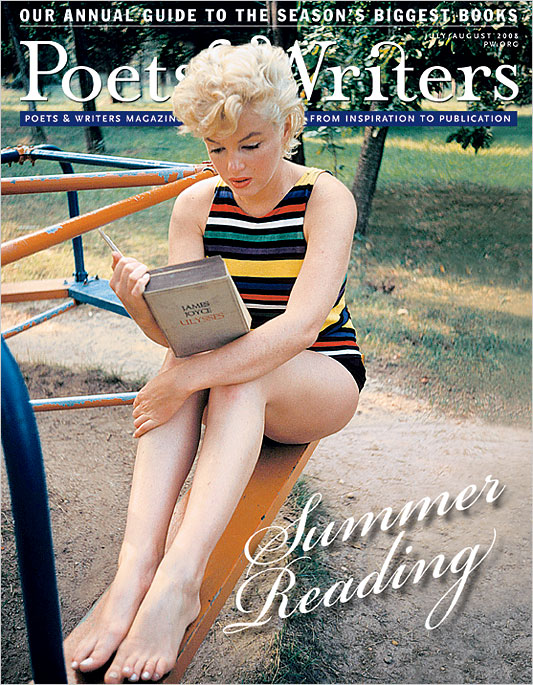
We don’t know where you hang your hat, but out New York City way, it is hot. Surface of the sun hot. Hotter than Marilyn Monroe-reading-Ulysses hot. Such weather makes us long for balmier climes—and the books we would read were we there. And while we know “beach book” has a certain connotation (mindless thriller, mindless romance, mindless sci-fi, mindless chick lit), the Ape has a particular affinity for reading books set on or around the beach while reveling in a little supine sunbathing. Here are a few recent favorites:


Sag Harbor by Colson Whitehead

Whitehead does a remarkable job of capturing that elusive quality of summering on the shore as a kid. Days are long, but the summer itself remarkably short. Idle curiosity can turn serious in a flash, just as the long years of childhood can change, in one season, into a rush of adolescence. Whitehead manages to dodge the easy wistfulness of many such novels though by giving us such a strong sense of place—the summering enclave for well-to-do African Americans in the 1970s. It’s another strong outing for Whitehead, who now has written four wildly different novels. And while this one doesn’t quite have the virtuosity of The Intuitionist or John Henry Days, Sag Harbor is no vacation from it either.


The Maytrees by Annie Dillard 

It's said of Prince that he can play virtually any instrument in virtually any style. Annie Dillard, it would seem, has a similar felicity with the written word. She has written glittering essays, introspective, moving memoirs, and serious works of theology and philosophy. In 2008, she announced that she'd be retiring from professional writing with the publication of her second novel, The Maytrees. And what a finale it is. The novel follows the meeting, courtship, marriage, divorce, reconciliation and death of the title couple on mid-century Cape Cod. The setting gives Dillard a chance to display her particular gift for setting, and the story itself manages to elicit empathy without resorting the rancor or mawkishness of so many failed relationship stories. As a bonus, Dillard has a penchant for the arcane word, which adds a certain pleasure of discovery to the already sparkling prose.


Spartina by John Casey

The Ape confesses a certain fascination with maritime literature. Fishing, boats, nautical navigation, knots—we can’t get enough of the whole lot of it. Spartina is the name of the boat that Dick Pierce has been trying to build for years and is a metaphor for his life—solid, unfinished, and needing attention he is somehow unable to give it. Casey is quite good both with the details of the life of a Rhode Island fisherman (or at least crafty enough to fool the uninitiated) and with the quiet complexity of middle age. Spartina is a kind of cross between The Perfect Storm by Sebastian Junger (though much less dramatic) and Empire Falls by Richard Russo (though with better prose). This is a personal favorite and an author that deserves a wider readership, which seems strange considering that Casey won the 1989 National Book Award for this novel.


(PS-We’re always looking for more great littoral literature, so drop us a hint in the comments if you’ve got a recommendation)

Friday, July 2, 2010

Imperial Bedrooms by Bret Easton Ellis: A Review-A-Long

Last week, Bret Easton Ellis’s Imperial Bedrooms, a sequel to his stunning 1985 debut Less Than Zero, arrived with no small degree of anticipation. Ellis has been a controversial writer ever since Less than Zero, and the mesmerizing mixture of shock and yawn that characterized that book does reappear in Imperial Bedrooms, but with far less effect. Imperial Bedrooms has not to this point been warmly and, rather than just throw another log onto the fire, we thought we’d do another little review-a-long, this time with Janet Maslin. (Bold text is from her review in the New York Times; italicized text is my response).

Let’s do this:

Whatever its genesis, what this vacant new book does best is demonstrate that there are more ways to be bored and boring in Los Angeles in 2010 than there were in 1985.

Maslin’s dead on here. We get extended descriptions of text-message conversations, marathon YouTube viewing sessions, and repeat visits to high-end retailers and restaurants. There’s a whole lot of nothing masquerading as something here. This was executed to scathing effect in Less than Zero because it was a fresh, contemporary critique by a contemporary. Imperial Bedrooms doesn’t say anything new, and, like the characters in it, masks banality, and eventually malice, with a veneer of techno-sophistication.

As “Imperial Bedrooms” begins, [Clay] is whinging that “someone we knew” wrote an unflattering book about Clay and his friends, and that the book was made into a movie[…]“Imperial Bedrooms” barely has time to set up this hall-of-mirrors conceit before abandoning it.

The ill-considered inclusion of a fiction-world version of Less than Zero feels like an idea born out of drunken bull-session. (“Wouldn’t it be cool if the characters in the new book were also characters in a book? That would be cra-zy.”) Perhaps to his credit, Ellis abandons the thread in the first few pages, but this only adds to the slap-dash feel of the novel. One of Less than Zero’s accomplishments was its remarkable pacing; it was a slow build, a transfixing crescendo from innocence to depravity. No such restraint exists in Imperial Bedrooms, as Ellis seems unable to maintain his prior focus.

It’s typical of Mr. Ellis to write a very long descriptive sentence about the soft beiges and recessed lighting and white-tiled balcony of the place while making only passing, casual reference to the party boy’s death. It’s also very like him to make the apartment a backdrop for casual cruelty.

“Casual cruelty” captures a feature of both novels beautifully, though Maslin seems to be dismissing it as some sort of ethical mis-step. Whatever the faults of Imperial Bedrooms, it does continue the moral flattening begun in Less than Zero. In a world where surface and sensation reign, pain and pleasure are equals, as are aesthetics and atrocities.  Representing cruelty casually gives the reader the sensation of amorality that seems to both fascinate and repel the reader and Clay himself. 

 […]there’s an element of real malaise in “Imperial Bedrooms.” The anomie and plot-derived menace may be contrived, but there’s a dread that feels genuine — and not because the book actually includes the line, “Sadness: it’s everywhere.” It’s the sense that options have narrowed for Mr. Ellis, whose most polarizing (“American Psycho”) or wild-eyed books (“Lunar Park”) have turned out to be his most vital ones.

By the end of the novel, I was thinking along these lines as well. Less than Zero’s ethical nullity pre-empted the need for any further exposition of it; once you’ve showed us the void, what else is there to do? This has been a literary puzzle, from Hamlet’s “there’s nothing good or bad but thinking makes it so” to Joyce’s empty chalice, for some time. While Hamlet and Joyce turned to art to create meaning, to fill the abyss, Ellis seems stuck on gazing into the blackness--as Maslin suggests—a terrifyingly bleak beige. 

Thursday, July 1, 2010

Swinging in Somebody Else's Tree

Aarti over at Booklust has a recurring feature in which readers and bloggers talk about a favorite, perhaps under-the-radar book.
One book that you adore, that you prize, that changed your life, that you would save from a burning building, that you found serendipitously on a library shelf or at a used bookstore, looking lonely and ignored.  A book that thrills you but that, you have come to realize, no one else has really ever heard of, much less read. 
We offered The Hunters by James Salter, and Aarti was gracious enough to post it. Salter was well-known in the middle of the last century, but he is criminally under-appreciated now. So head on over and check out my humble exhortation to try The Hunters.

Monday, June 28, 2010

Top 10 Totally Decent Books of the Century

Jane Ciabattari, critic, novelist and President of the National Book Critics Circle, ranked the ten best books (just in fiction, we assume) of the now decade-old century. Her list:

Half of a Yellow Sun by Chimamanda Ngozi Adichie 
The Brief Wondrous Life of Oscar Wao by Junot Diaz 
A Visit from the Goon Squad by Jennifer Egan 
The Known World by Edward P. Jones 
Atonement by Ian McEwan 
A Mercy by Toni Morrison 
Hateship, Friendship, Courtship, Loveship, Marriage: Stories by Alice Munro 
Bel Canto by Ann Patchett 
Lark and Termite by Jayne Anne Phillips 
Gilead by Marilynne Robinson
Now normally these types of list don’t get our gears grinding, but this list caught our attention. We’ve read eight of them and it’s hard to argue against any of these, but it’s also pretty hard to argue for most of them either. Admittedly, we’d include Brief Wondrous Life of Oscar Wao and Gilead on our own version of this list (and did in our utilitarian Swiss Army 10), but it seems like we should feel more strongly about the rest.

To be clear, these are definitely admirable books, but we want to feel something more than admiration for the best books, don’t we? Perhaps we need some other scale, or even some specificity about what the scale is measuring. For us, that special something is hard to articulate, but it is some combination of surprise, pleasure, depth, craft, innovation, and risk. And we think it’s that last element that seems to be the one that most even very good books sometimes lack. For example, Gilead, probably my favorite book of the last decade, isn’t risky. It’s beautiful, intelligent, and moving, but it not at hazard.

There is an element of danger to greatness; it threatens our settledness and even our sense of the world. There have been a few instances where I have felt my complacency threatened in the last decade (The Road, 2666), but, either because it’s a quality in short supply or because I’ve somehow avoided it, I have a hard time coming up with ten books I would call great. That's not to say, though, that there haven't been really good books or that I think we live in a fallow artistic era. But it is worth remembering that the great works of the past have been transgressive, challenging, and misunderstood--in their own time and in ours. So perhaps the Ape, in search of the extraordinary, needs to abandon the pleasant shallows of the very good.

Thursday, June 17, 2010

Ask the Ape!: Did Somebody Call for a Doctor? Edition

Welcome back to Ask the Ape!, wherein readers, acquaintances, and even possibly fabrications of our imagination pose questions of the literary stripe. This week’s question is about doctors.
Ape!
My brother just graduated from college and will be starting medical school in the fall. This summer he’s not doing much of anything and I thought a good, belated graduation gift idea might be some books about being a doctor. He’s a good reader, but it is his only free time of for the next like 20 years, so maybe nothing too hard. 
Thanks!
This was a little more difficult than we initially thought it would be; it seems like the medical profession hasn’t been as mined as some others, though that might be some sort of selection bias. Still here are a few ideas for a doctor-to-be, with the special twist that all of these were written by doctors themselves. Unfortunately, they cost ten times what they should (kidding).


The House of God by Samuel Shem is the story of six new doctors trying to survive a year-long internship. I’ve been told by MDs who’ve read it that it’s remarkably spot-on with medical details and the practice of medicine—a fact that non-doctors, (re: the Ape),  will find vaguely terrifying. Throw in some sexual melodrama and the faintest whisp of existential dread, and you have a brisk and captivating read.


Cutting for Stone by Abraham Verghese. There’s a lot going on in Cutting for Stone, including family melodrama, sibling weirdness, Ethiopian politics, and nuns, but the core of the novel is medicine. Set largely in a Catholic missionary hospital in Ethiopia, this is the story of Marion Stone, progeny of a nun and the missionary doctor who loved her. After his mother’s death in childbirth and his father’s subsequent flight to America, Marion, and his twin brother Shiva, is adopted by another of the hospital’s doctors. Together, the two boys grow up watching and learning what it means to commit one’s life to the betterment of others—and the costs of doing so. This is an epic book, and though it is a little overwrought in places, it somehow manages to be both moving and informative—a rare and welcome combination. (Also, your knowledge of prenatal care in sub-Saharan Africa will increase exponentially, and if you’re anything like me, you’re always thirsting for more knowledge of African prenatal care.)


Bloodletting & Miraculous Cures by Vincent Lam
The Novel-as-linked-stories is probably an especially useful technique in writing about medicine, since medicine itself seems quite episodic; each patient is a new story connected only by the physicians and nurses who tend to them. Bloodletting & Miraculous Cures uses the flexibility of short stories to great effect, moving from the trials of being accepted to medical school in China, to the sleep-deprivation and soul-searching of medical education, to the cultural and racial mĂ©lange of the modern health care system. Lam’s dialogue is a little tin-eared, but Bloodletting is generous and imaginative—a higher-rent version of something like Grey’s Anatomy.


So those are three picks from us, what would you, sage readers, suggest for books about the scions of Hippocrates? Let us know in the comments.

Thursday, June 10, 2010

I Curse the River of Time by Per Petterson

To be a citizen of Per Petterson's Norway is to be a stranger to yourself; your nine-year-old self walks shoulder-to-shoulder with your 37-year-old self, who in turn remembers what it was to be 22. As a result, the eternal question of "Who am I?" is doubled, folded, and refracted into "Which I exactly am I?"

Petterson's 2003 breakout novel Out Stealing Horses is relatively straightforward. At age 67 Trond Sander, retired and living in a sparsely populated corner of the country, is trying to come to terms with a childhood trauma that has haunted him for more than five decades. The persistence of that event in Sander's life (and the trouble it causes him) seeps into the water, dirt, trees, and air around him; the muted colors and winter barrenness of the landscape become the stage for his memory play. His daughter Ellen has no such access. She visits him and tries to understand what it is that has driven him back into himself.

Petterson's masterly new novel, I Curse the River of Time, might be thought of as a sort of companion piece. Not only does it reside at the same juncture of identity, memory, and time, but it also mirrors Out Stealing Horses's narrative structure. This time, however, a child's confusion with a parent's distance is the center of the story.

Three major parts of Arvid Jansen's life are drawing to a close. His marriage is ending. The Berlin wall is coming down, along with the left-wing idealism of his youth. And his mother is dying. The failure of this triad has sent him into an existential tailspin, and he is left wondering how his life ended up in such tatters. What Arvid doesn't see, but that Petterson allows us to see, is that Arvid is not, to borrow from the opening sentence of David Copperfield, the hero of his own life.

No, I Curse the River of Time, is the story of how one tragedy in his mother's life echoed across Arvid's. Though perhaps, given the novel's title, derived from a poem by Mao, "echoing" is the wrong metaphor. The river-as-time construction does to a degree capture the particular causality of Arvid's life — because of cataracts upstream, he is subject to turbulence beyond his control or ken. In turn, his own daughters' lives will be shaped by how he deals with his estrangement from his mother.

If we live long enough, it seems we will all eventually find ourselves in Arvid's position, struggling to understand how things for which we so ardently hoped have collapsed and why people so important to us have left. How will we deal with that realization? How will we, if we can, come to terms with our insufficiency and not be crushed by it?

Petterson's great gift to us here is to show us the cost of this kind of despair. Arvid thinks that he has some "flaw, some crack in the foundation of his character" that has caused him to be something other than what he had hoped, but it is only his mourning for an idea of himself that prevents him from living in full:
"Now comes what you have always feared, and you suddenly realise that every chance of being the person you really wanted to be is gone forever, and the one you were, is the one that those around you will remember. Then that must feel like someone's strong hands slowly tightening their grip around your neck until you can breathe no more." 

Some are foolish enough to claim they have no regrets, but most of us know that is delusion. Petterson challenges us to acknowledge both our frailty and our folly while not flinching at them, to value not what we had hoped for, but what we have saved.
____________________________________________
This review references an advance copy; the final published version may have minor changes.

I Curse the River of Time will be available starting August 3, 2010.

This article first published as Book Review: I Curse the River of Time by Per Petterson on Blogcritics.

Wednesday, June 2, 2010

The Girl Who Kicked the Hornet's Nest by Stieg Larsson: A Kakutani Review-a-long


So, the final chapter in Stieg Larsson's Millenium Trilogy arrived last week and the Ape has made it through to the end. As is our habit, we took a look at some mainstream reviews after finishing the novel and found a surprising, to us at least, amount of praise for this frustrated and frustrating coda. 

Perhaps least expected was the warmth with which Michiko Kakutani received The Girl Who Kicked the Hornet's Nest (especially considering that she hates more than half of the fiction she reviews). So rather than offer another review, we thought we'd read along with Kakutani's. She begins: 
Lisbeth Salander, Stieg Larsson’s fierce pixie of a heroine, is one of the most original characters in a thriller to come along in a while — a gamin, Audrey Hepburn look-alike but with tattoos and piercings, the take-no-prisoners attitude of Lara Croft and the cool, unsentimental intellect of Mr. Spock.
No problem here--Salander is clearly the spinning, molten core of the trilogy. Like all great characters, we miss her when she's off-stage. This is problem one with Hornet's Nest; Salander spends nearly all of it in the hospital, writing a brief autobiography for her eventual trial and dispatching her hacker comrades to infiltrate the hard-drives of her enemies. As boring as Salander's computer hacking was in the first two novels, at least there she did it herself. Here, she just tells other people to do it. 

It is a problem, though, Larsson created for himself. As we noted in an earlier post, by the end of The Girl Who Played with Fire, Salander is so, as Kakutani writes, "incandescently proficient," that she must be sequestered for there to be any doubt about her fate. (This is something you see in other stories with characters who are simply too powerful to be interesting. Professor X exemplifies the narrative conundrum; it seemed like baldy was in a coma, drugged, captured, or in an alternate spectral plane in every major X-Men series. Dude was just too powerful for the stories to work with him around.)

So rather than follow the character we've signed on for, we have to follow around a series of cops, journalists, and bureaucrats for the preponderance of the story, which makes the following evaluation from Kakutani all the more head-scratching: "It’s also a thoroughly gripping read that shows off the maturation of the author’s storytelling talents."

To our mind, Hornet's Nest is the most confused and inert of the three. It seems that Kakutani has a soft-spot for the novel despite the absence of Salander, whom she acknowledges is the trilogy's engine: "The novels’ central appeal, however, remains Salander herself: a heroine who takes on a legal system and evil, cartoony villains with equal ferocity and resourcefulness."

Somehow, she also manages to ignore the book's heavy-handed social critique ("these novels actually don’t have any didactic thesis to convey"), even though each section of the novel is preceded by an historical vignette about warrior-women and that the moral of the story is neatly and clearly articulated by a main character: "When it comes down to it, this story is not primarily about spies and secret government agencies; it's about violence against women, and the men who enable it." 

And while it's certainly possible to enjoy the novel despite the moralizing, suggesting that there isn't a larger issue at stake seems a misreading. In fact, the disjointed ending that Kakutani herself notes is a direct result of Larsson's twin narratives: Salander's personal story of liberation, which culminates with a grizzly, caricatured battle with her half-brother, and the journalistic critique of Swedish law enforcement and constitutional oversight, which is really the main "drama" of The Girl Who Kicked the Hornet's Nest. 

Kakutani seems to collpase these narratives--"the real showdown in this harrowing novel is between Salander and a ruthless government cabal"--when in fact there really is no such showdown. Salander's interaction with the "cabal" is carried out almost entirely by intermediaries. Indeed, her persistent refusal to talk with anyone but her lawyer is itself a major plot element. 

In our final analysis, we find the second and third installments an order of magnitude weaker than the tight, propulsive The Girl with the Dragon Tattoo, where Kakutani finds that Larsson has brought things to a close "with dexterity, ardor and a stoked imagination." 

We wish we could agree.

Thursday, May 20, 2010

The Help by Kathryn Stockett: a Reflection

By now, The Help by Kathryn Stockett is review-proof; it has spent 50 weeks on the New York Times Bestseller list and has almost 2 million copies in print. Add to that the 797341283764123 book club guides and blog reactions, and there’s not much left to be said on the recommendation side. (Though you might be interested in a brief plot summary)

What remains interesting to us here at the Ape, though, is why did it become so popular? And what does that mean? Literary phenomena like The Help are as fascinating as they are inscrutable, though the The Help does seem to a trend among recent literary hits (The Lovely Bones, The Kite Runner, The Curious Incident of the Dog in the Night-Time, Water for Elephants, among others) in that while they are likely not going to enter the literary canon, they are also not exactly disposable.

In fact, “betweenness” describes much of what The Help does (and doesn’t). It is a story about what it was like to be a black servant in the South during the 1950s and 1960s, but it’s also a story of a young white woman using that story to start her writing career. It is a story of racial oppression that somehow doesn’t want to acknowledge the social consequences of race as “real”:
Lines between black and white aint there…Some folks just made those up, long time ago. And that go for the white-trash and the so-ciety ladies too.
Like the book itself, this view is both noble and reductive, aligning “constructed” social ideas with evil and “authentic” identity, like being able to cook and having a charming dialect, as “good.” This strategy allows the book to deal with difficult problems without actually being difficult, without challenging already agreed upon social ideas. Clearly, racism is bad. Clearly, classism and snobbery are bad. Clearly, friendship and affection are good.  But to describe the origins of racism as “just being made up” abdicates our own role in the continuing struggle for civil rights and social equality. If racism is someone else’s “fault,” then we, the kind of people who are demographically inclined to read novels and join books clubs, are not at fault.

Stockett, much to her credit, acknowledges the problems of tackling American racism: “I don’t presume to think that I know what it really felt like to be a black woman in Mississippi.” Still, when relating the line in the novel that she “truly prize[s],” she reveals a certain fantasy of understanding:
Wasn’t that the point of the book? For women to realize, We are just two people. Not that much separates us. Not nearly as much as I thought.
Again, the novel finds itself in-between; Stockett recognizes the impossibility of understanding, even as she fantasizes about somehow transcending that impossibility.

Perhaps, though, this tension reflects our cultural moment. Racism is now figured as somehow in the past, but we also know that it is not gone. Reading about racism in the South during the Civil Rights Movement feels almost like a moral holiday, a reprieve from the complexity and intransigence of contemporary racism. Thus, the frustration of The Help is that while it is very readable and rich, it is, for a book about racism, unbelievably safe. 

One last note. Within three weeks of its publication, Richard Wright’s Native Son had sold more than 250,000 copies and was an official Book of the Month Club selection. Seventy years later, The Help is enjoying similar, if not even greater, commercial success, and our country’s ideas about race certainly have progressed. We do wonder, though, if the same can be said about our willingness to be challenged by literature.